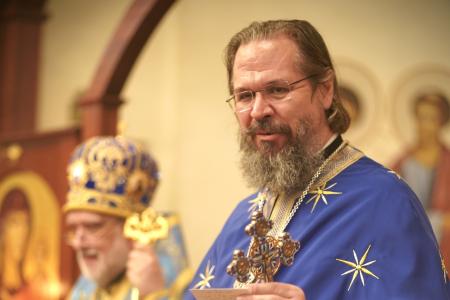
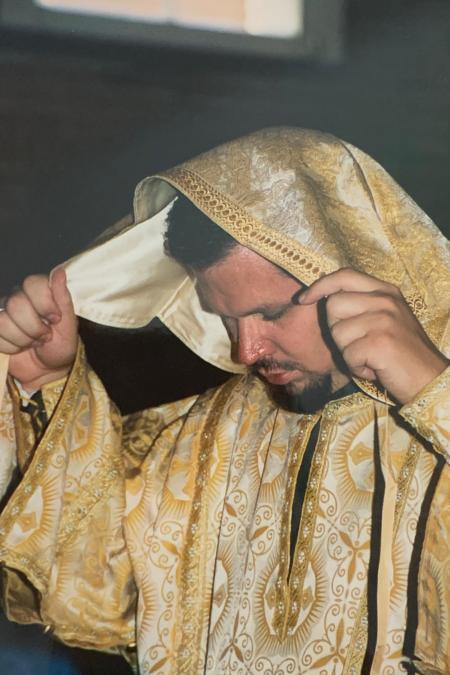
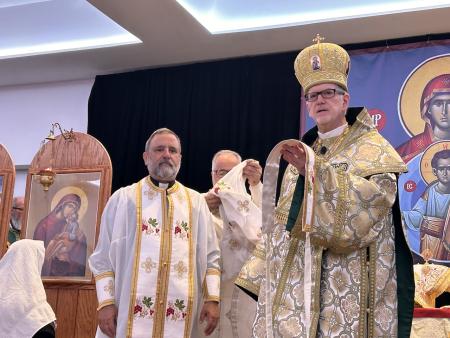
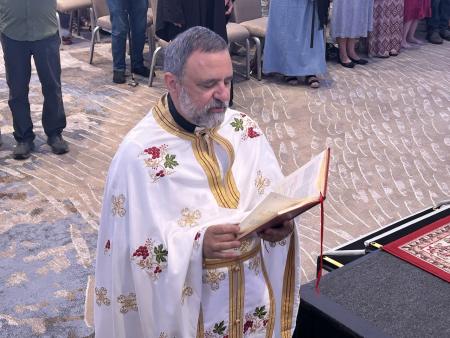
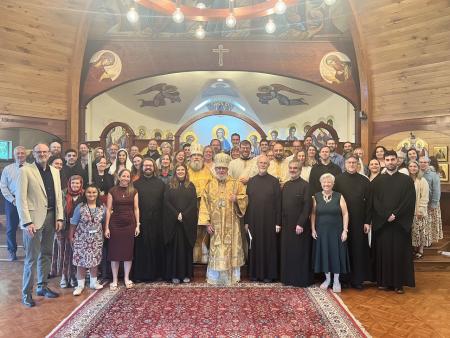
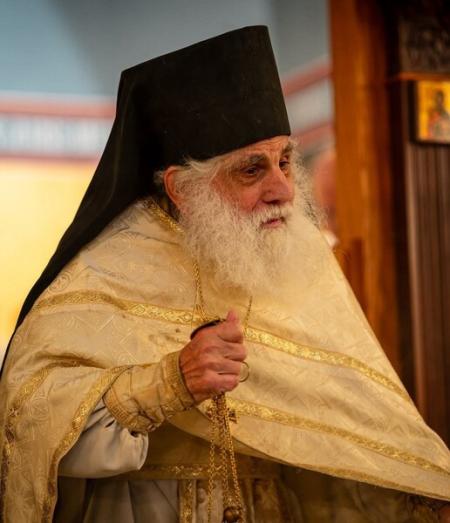
The community of St. Vladimir’s Seminary joyfully celebrates the twenty-fifth anniversary of Archpriest Alexander Rentel’s ordination to the Holy Priesthood!
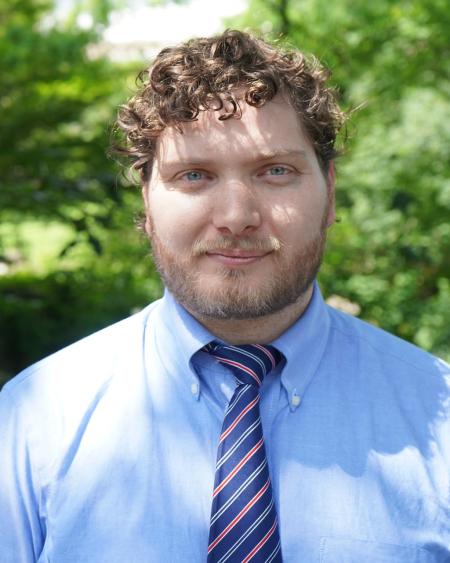
The Very Rev. Dr. Alexander Rentel is Rector of the Three Hierarchs Chapel and Assistant Professor of Liturgical Theology and Canon Law at the Seminary.
“Fr. Alexander has a legacy of service and deep love for St. Vladimir’s Seminary,” said Seminary Dean Dr. Ionuț-Alexandru Tudorie. “We, as a Church, are indebted to him for all his priestly labors during these twenty-five years. AXIOS!”
Fr. Alexander Rentel was ordained to the Holy Priesthood in 2001.
Fr. Alexander and his wife Matushka Nancy (née Homyak) both graduated from St. Vladimir’s Seminary’s M.Div. program in 1995. Fr. Alexander was ordained to the Holy Priesthood on July 21, 2001, and went on to finish his doctoral dissertation under the direction of the renowned liturgist Fr. Robert Taft, S.J., at the Pontifical Oriental Institute in Rome in 2004. In addition to Fr. Alexander’s many years as a faculty member at St. Vladimir’s Seminary, he has also served as Chancellor of the Orthodox Church in America. He and Matushka Nancy are the proud parents of three children: Dimitrios (a second-year seminarian at St. Vladimir’s), Maria, and Daniel.
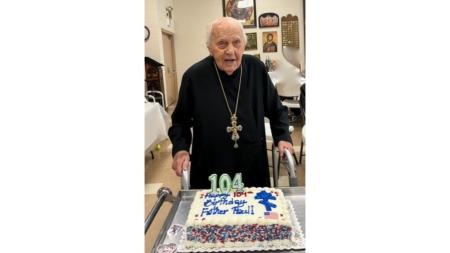
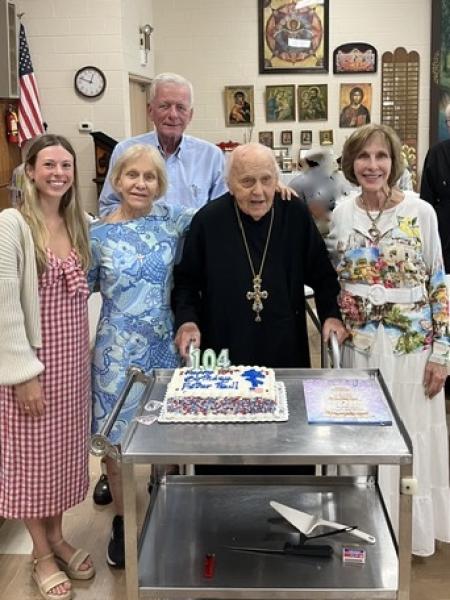
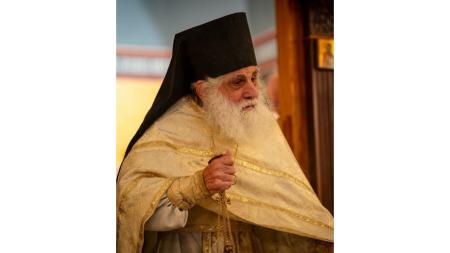
By the grace of God, St. Vladimir’s Seminary Alumnus Archpriest Paul Shafran celebrated his 104th birthday this July.
Fr. Paul, the oldest living Seminary alumnus, marked the occasion on July 2. His daughters Nina Shafran and Paula Koerte arranged an in-home celebration with family. Then, on Sunday, July 5, the celebration continued at St. Vladimir Orthodox Church in Trenton, NJ, where Fr. Paul is Pastor Emeritus. Current Pastor Fr. Volodymyr Chaikivskyi, family members, and parishioners joined in the celebration.
The Very Rev. Paul Shafran was born to an Orthodox family in 1922 in Olyphant, PA, and went on to study at Columbia University and St. Vladimir's Seminary. He graduated from the Seminary in 1945 but returned a few years later for post-graduate studies, and he began teaching Liturgics as a member of the faculty in the 1950s. Fr. Paul’s commitment to theological education saw him not only teach at the Seminary but also serve as a trustee starting in 1966, and he accomplished much in his decades on the Seminary Board.
Fr. Paul married his beloved Matushka Mary (+2025) on November 27, 1947. He was ordained to the Priesthood December 28, 1947, by the hand of Archbishop Nikon (de Greve of Brooklyn) at the Cathedral of the Holy Virgin Protection in New York City. Fr. Paul was elevated to Archpriest in 1961. His priestly ministry included more than fifty years as Pastor of St. Vladimir Orthodox Church in Trenton, service as Assistant Chairman of the Sunday School Committee of the Orthodox Church in America, and appointment to a commission by the Great Council of Bishops for the translation of liturgical books from Russian into English.
Longserving Deacon John Dibs joined the ranks of the Holy Priesthood this summer. Fr. John, an alumnus of St. Vladimir’s Seminary, was ordained on Saturday, July 4, during Divine Liturgy held in San Diego at the Parish Life Conference of the Antiochian Orthodox Diocese of Los Angeles and the West. His Grace Bishop Anthony (Michaels) presided.
The Rev. John Dibs is the son of the late Mary and Dr. George Dibs from Southern California. As a child Fr. John attended St. Luke Church in Garden Grove, CA. He graduated from U.C. Berkeley (B.A. in History, 1984) and St. Vladimir’s Seminary (M.Div., 1987). During his time at the Seminary Fr. John volunteered as a parish assistant at St. Nicholas Orthodox Church in Juneau, AK, in the summer 1984; was a member of the St. Vladimir’s Seminary Octet in the summer of 1985; and volunteered at the SYNDESMOS Secretariat in Kuopio, Finland in the summer of 1986. (SYNDESMOS is the world fellowship of Orthodox youth organizations.) His ministry has included service in the Antiochian Archdiocese’s Society of Youth Organization (SOYO), on the editorial board of The Word magazine, and on the Executive Committee of SYNDESMOS. After his ordination to the Holy Diaconate in December 2001, Fr. John went on to serve multiple Antiochian parishes in California including St. Nicholas Orthodox Church in San Francisco, St. Timothy Orthodox Church in Fairfield, CA, and the Orthodox Church of the Redeemer in Los Altos Hills, CA.
Following his ordination to the Priesthood, Fr. John has been assigned to serve as Pastor of St. Mary Antiochian Orthodox Church, Murrieta, CA.
Fr. John married Irena Szydlowska from Hajnowka, Poland in 1990. They have four adult children living in the Bay Area: John, Michael, Gregory, and Maria.
May God grant many years to the newly ordained Fr. John, his wife Khouria Irena, and their family!
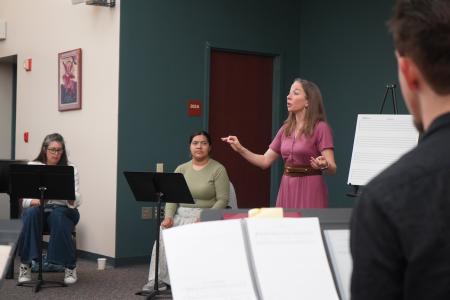
This year’s Summer Music Institute at St. Vladimir’s Seminary brought together more than sixty people from Orthodox parishes across North America. From June 22–27 participants of all musical levels and experience studied and worshipped alongside noted liturgical music experts and instructors including Fr. Stephen Meholick, Alexander Lingas, Vladimir Morosan, Photini Downie Robinson, Juliana Woodill, and Alice Hughes.
“What an amazing community of musicians we had in attendance this year,” said Hughes, who was one of the Institute’s chief organizers this year together with Dn. Harrison Basil Russin, Zachariah Mandell, Alexander Lingas, and Peter Bouteneff. “It was a joy to observe the camaraderie and supportiveness of the participants, who had various levels of experience and training, working together to grow and learn, to rehearse and then to render with beauty and prayer the services this week.”
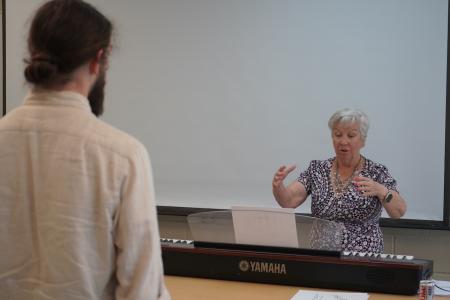
Alice Hughes teaches vocal technique during an individual Summer Music Institute session.
The 2026 Summer Music Institute, an event of the Seminary’s Institute of Sacred Arts (ISA), offered training in musicianship, vocal technique, conducting, and—new for this year—advanced studies in the history of Orthodox liturgical music. The three keynote lectures delivered throughout the week explored the planting, cultivation, and flourishing of Orthodox music in North America and highlighted musicians such as Boris Ledkovsky, Michael Gelsinger, Tikey Zes, Michael Hilko, and others.
“If we continue with God’s help and guidance to build on the foundation that has been laid by our Orthodox musical forefathers here in America,” proposed Vladimir Morosan during his keynote lecture, “we will be contributing to that essential event of transforming this land, our nations of North America, in ways that the Puritans, first settlers, and founding fathers would never have imagined. May it be God’s will!”
Dr. Vladimir Morosan was one of three keynote speakers who delivered lectures throughout the week, along with Fr. Stephen Meholick and Dr. Alexander Lingas.
Each day Institute participants also convened in the Seminary’s Three Hierarchs Chapel for services, serving as the choir during Matins, Vespers, Divine Liturgy, and a special Panikhida for all departed Church musicians. During the Panikhida Fr. Alexander Rentel recited an extensive list of names which parishes from around North America submitted for remembrance. Two of the daily services (Great Vespers on Tuesday and Saturday Matins) were sung by a Byzantine Schola led by Photini Downie Robinson, Alexander Lingas, and Eleftherios Chasanidis. Dr. Chasanidis is protopsaltis of the Greek Orthodox Archdiocesan Cathedral of the Holy Trinity.
The Summer Music Institute concluded on June 27 with a Hierarchical Divine Liturgy presided over by His Grace Bishop Benedict of Hartford and New England.
“What draws me back each year is the continued training as well as the camaraderie,” shared Alta Xenia Morris, who has been to multiple Summer Music Institutes including this year’s. “Spending time together with Church musicians who are serving their parishes in the same way that I'm serving my parish truly makes my heart sing. Being able to learn from those who have more experience than I or to help those who are struggling in ways that maybe I’ve struggled before, learning together, laughing together, brainstorming, problem solving—that time spent together always leaves me ready to return to my parish with renewed energy and purpose.”
Next year’s Summer Music Institute is set for the week of June 21, 2027. More details will be announced in the coming months.
The participants and faculty of the 2026 Summer Music Institute.
The Institute of Sacred Arts (ISA) at St. Vladimir’s Orthodox Theological Seminary explores the intersection of human creativity and holiness. With a theology that is holistic, and a liturgy that unites multiple artistic disciplines and all the human senses, the Orthodox Christian tradition is ripe for the exploration and celebration of the sacred arts. Since its founding in 1938, St. Vladimir’s Seminary has fostered the study of icons, music and liturgy. The ISA serves to extend the seminary’s mission in exploring the mutual relationship between theology and the arts by: contributing to the work of people and institutions that practice and reflect on the sacred arts; engaging people and institutions of all backgrounds with Orthodox artistic tradition; inspiring wider public interest in spirituality and the arts. Learn more at www.instituteofsacredarts.com.
PHOTO GALLERY: Scenes from the Summer Music Institute
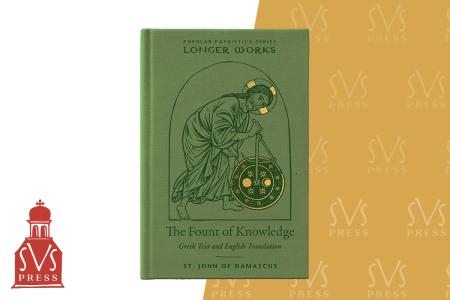
With the help of generous supporters of the Seminary, St. Vladimir’s Seminary (SVS) Press is closer to publishing St. John of Damascus’ masterwork, The Fount of Knowledge. It will be the third of the new Popular Patristics Series: Longer Works. Longer Works is an extension of the classic SVS Press series designed to publish major, full-length patristic texts that are too long for the traditional Popular Patristics Series format.
What makes The Fount of Knowledge so significant, and why is SVS Press working on a new translation to bring to readers? Press Director Dr. Daniel Stauffer offers his thoughts.
Could you offer a brief biographical sketch about St. John of Damascus—his early life and formation, his path in ministry?
John of Damascus was born in Damascus several decades after it was conquered by the Muslims in the mid-seventh century. Coming from an elite family, he served in the court of the Umayyad caliphate. Eventually, probably due to increasing hostility towards Christians from the Muslim rulers, he abandoned his civil-service career to become a monk at the Monastery of St. Sabas near Jerusalem, where he lived the rest of his life. Here he gave orations in the Church of the Holy Sepulchre—for which he received the name Χρυσορρόας, or “flowing with gold”—and composed a great deal of liturgical poetry that is still used by the Orthodox Church today. (For instance, the text of Matins used during the midnight Paschal Service every year is attributed to St. John.)
St. John is considered one of the greatest of the early Church fathers of the East during the first millenium. Why is he so significant, and what is the reason for his enduring appeal?
St. John of Damascus is important because he acts as a synthesis of much of the preceding patristic tradition. He also has a significantly easier and more straight-forward style than many other patristic authors, which makes him more accessible to a broader audience. He is also of great interest as the first of the great Christian authors to interact with Islam, and this gives his work significance for understanding the new world emerging in the Near East in the seventh and eighth centuries.
Tell us a bit about the translation process and the translator of this work, and why the Press prioritized a new version of St. John's magnum opus when other versions already exist.
There is only one prior translation of The Fount of Knowledge, done in the 1950s and published by Catholic University of America (CUA) Press. This translation is, unfortunately, somewhat outdated and inaccurate in places, and it was done based on an imperfect version of the original Greek text. Now that we have a much-improved version of the Greek text (the editor, Bonifatius Kotter, dedicated basically his entire life to producing immaculate versions of all of St. John’s prose works), SVS Press thought it was time for a new translation. The translator for this project, Norman Russell, is one of the foremost living translators of Byzantine theological texts.
Who do you believe will benefit from this book? Are portions of it accessible to lay readers?
On the Orthodox Faith, which is the third part of The Fount of Knowledge, was published by SVS Press in 2022, and it immediately became one of our most popular books. That being said, SVS Press always intended to publish the first two parts of The Fount of Knowledge as well, although Norman Russell only finished the translation of these earlier parts after On the Orthodox Faith had been out for several years. Presenting the entire work in a single volume will provide readers with the most comprehensive view possible of John of Damascus’ approach to the Christian faith.
This book is the third in the Popular Patristics Series: Longer Works, a new subseries recently launched by SVS Press. Can you tell us a little more about the Longer Works?
SVS Press is very excited for its new Popular Patristics Series: Longer Works. St. Gregory Palamas’ Triads was the first volume in this subseries, and it has been a huge hit with our readers, and the second volume, Hymns of Divine Eros by St. Symeon the New Theologian, is currently being printed. A great thing about Longer Works is it allows us to publish a whole range of patristic works that could never have fit into the smaller volumes of the Popular Patristics Series. The higher prices of these books also allow us to produce a higher quality physical product (hard cover, sewn binding, etc.) that will last through decades of reading and rereading by our customers.
Would you like to help make this important work available to the public in a fresh English translation, and for the first time printed with the Greek text on the facing page? Become a partner with SVS Press and invest in this exciting project. Click hereto learn how.
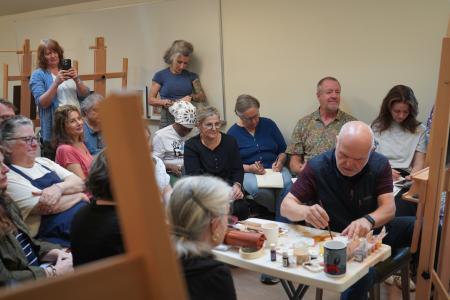
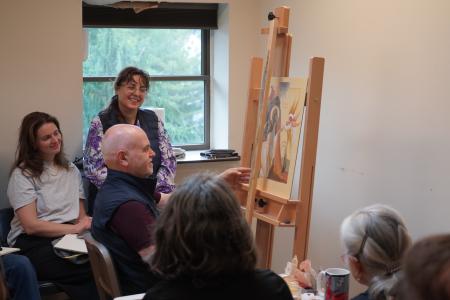
This year, he offered a five-day icon painting intensive in the Byzantine system both for beginners and more advanced, from June 15–19. The Seminary welcomed to campus both independent students and others participating in Writing the Light’s certificate program.
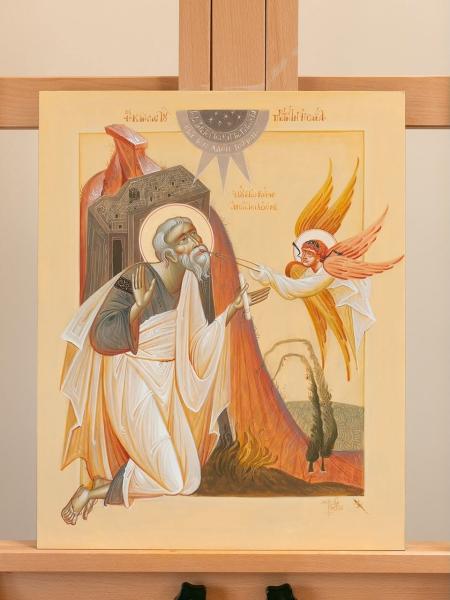
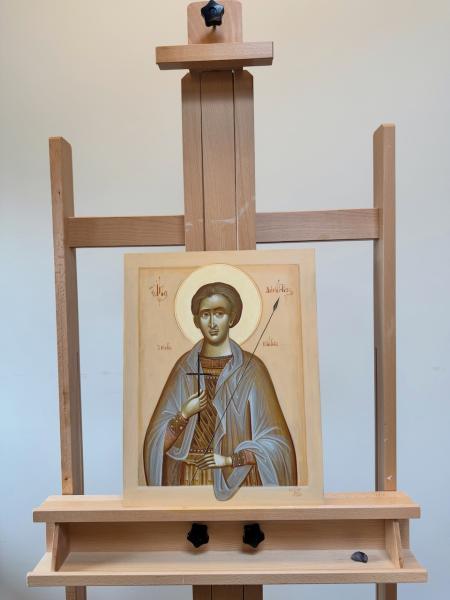
During this visit to the Seminary Dr. Kordis completed two icons: one of St. Demetrius and one of The Purification of Isaiah.
ABOUT DR GEORGE KORDIS Eminent iconographer George Kordis has the rare distinction for a practicing artist of a complete academic training in theology, with advanced theological degrees from Holy Cross Greek Orthodox School of Theology in Boston and the University of Athens, where he was assistant professor in iconography (theory and practice). His training as a painter preceded and motivated his move into theology: During the 1980s he worked with the Cypriot master iconographer, Fr. Symeon Symeou, and also studied painting at The School of Fine Arts at The Museum of Boston from 1987–89; and even while obtaining his doctorate (Athens) in 1991 he continued his studies in painting and engraving under Fotis Mastichiadis. Dr. Kordis has been a visiting professor teaching icon painting courses at Yale University, the University of South Carolina, the University of Bucharest/Department of Orthodox Theology, and Ukraine Pedagogical University, Odessa, while continuing to create major church programs of iconography—including several in the US (see Holy Trinity in Columbia, SC and, recently, Holy Trinity in Pittsburgh and panel icons, which have been seen in numerous prominent exhibitions at Yale University and elsewhere). Kordis is also a prolific author with wide-ranging interests: theory and practice of Orthodox iconography, Fayum mummy portraits, Theophan the Cretan, Andrei Rublev, Fotis Kontoglou, Greek folk art, and many other topics.
We are excited to announce the return of St. Vladimir’s Seminary’s Summer Music Institute, to be held on campus from June 23–27, 2026, with pre-institute intensive June 22–23.
This year’s Institute will celebrate and explore the planting, cultivation, and flourishing of Orthodox musical traditions in North America, and the musicians who laid the groundwork for the English language liturgical singing of today. Teachers and experts including Alexander Lingas, Vladimir Morosan, Photini Downie Robinson, Juliana Woodill, and Alice Hughes will lead courses of study on vocal technique and choral conducting, as well as advanced seminars on Orthodox music. Come worship, build skills, and enjoy fellowship together!
The Institute of Sacred Arts (ISA) at St. Vladimir’s Orthodox Theological Seminary explores the intersection of human creativity and holiness. With a theology that is holistic, and a liturgy that unites multiple artistic disciplines and all the human senses, the Orthodox Christian tradition is ripe for the exploration and celebration of the sacred arts. Since its founding in 1938, St. Vladimir’s Seminary has fostered the study of icons, music and liturgy. The ISA serves to extend the seminary’s mission in exploring the mutual relationship between theology and the arts by: contributing to the work of people and institutions that practice and reflect on the sacred arts; engaging people and institutions of all backgrounds with Orthodox artistic tradition; inspiring wider public interest in spirituality and the arts. Learn more at www.instituteofsacredarts.com.
Ten years removed from “The Holy and Great Council,” how should the large pan-Orthodox council, convened by the Ecumenical Patriarch and held in 2016 on the island of Crete, be remembered? What lessons have we learned? What can we see more clearly now, in retrospect?
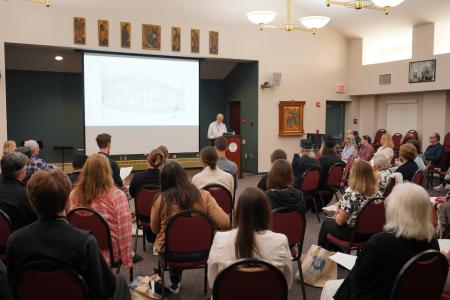
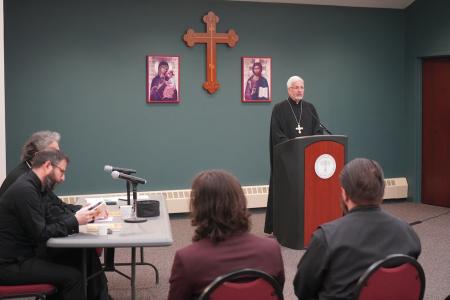
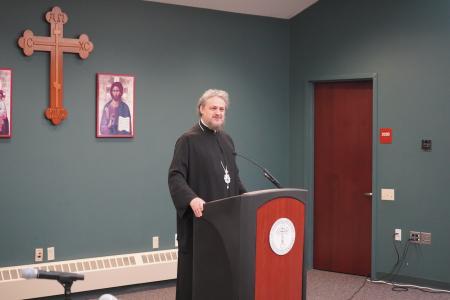
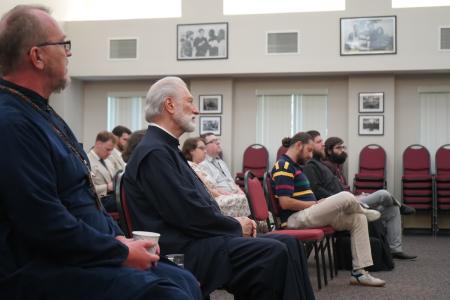
The Council of Crete’s legacy was the subject of the Orthodox Theological Society of America (OTSA)’s Annual Meeting (June 11-13) and the Florovsky Lecture for 2026, hosted on the campus of St. Vladimir’s Seminary. His Grace Bishop Maxim (Vasiljević), who was present at the council in 2016, delivered a magnificent lecture.
“I can tell you that from the very first session, the experience was unlike anything I had anticipated. …” His Grace remarked.
He went on to express what he believed the council was and was not, but emphasized any evaluation of its significance must be measured against a proper understanding of conciliarity.
“Synodality in the deepest patristic sense is a theological reality before it is an institutional one. It relates to Pentecost, to the Eucharist, to the gathering of the dispersed children of God into one body. From this perspective, the Council of Crete was not diminished by the absence of four Churches or by procedural imperfections,” said Bishop Maxim. “What made it a council was the daily Eucharist, the genuine theological encounter, the charismatic atmosphere which I can testify to personally. The grace of the Holy Spirit was palpably present in the hall, and bishops who had never met once one another discovered that they shared not merely an administrative communion but a living faith.”
Bishop Maxim was originally one of four panelists, all of whom were present at the council, set to present at this year’s Florovsky Lecture. Due to unforeseen circumstances, however, the other speakers, Very Rev. Protopresbyter Dr. Nicolas Kazarian, Dr. Elizabeth Prodromou, and Very Rev. Dr. Alexander Rentel, were unable to participate as planned. OTSA organizers hope to bring them all back for a virtual event in the coming months to continue the discussion.
“[OTSA] was originally an association that put together the two faculties of two seminaries in North America: Holy Cross from Boston and St. Vladimir’s from New York. …” Dr. Tudorie noted. He pointed to the 2026 gathering at St. Vladimir’s Seminary as an opportunity to renew and strengthen those ties. “I am very happy that this was possible and I'm looking forward to more,” he added.
For more information about OTSA, visit the organization’s website at otsamerica.net.
With faith in Christ and hope in the resurrection, we share news of the repose of Hieromonk Alexis (Lisenko), an alumnus of St. Vladimir’s Seminary. Fr. Alexis, who is remembered as a kind, gentle, and gifted priest, fell asleep in the Lord on Friday, June 12.
Hieromonk Alexis was born in Paris, France, on March 31, 1947, to a Russian mother and a Ukrainian Father. At the age of four his parents immigrated to the US, first to San Francisco, CA, and then to Berkeley, CA. After graduating from high school in 1964 he went on to study at the University of California-Berkeley, receiving a degree in Sociology in 1968. He then studied and taught Russian at the US Defense Language Institute in Monterey, CA. He graduated from St. Vladimir’s Orthodox Theological Seminary in 1978.
He was ordained at Holy Trinity Cathedral in San Francisco, CA, in 1979 and was assigned as a priest in Santa Rosa, CA. In 1980 Fr. Alexis was assigned to Holy Virgin Mary Cathedral in Los Angeles, CA, where he served for the next fifteen years. From 1995 on, he served parishes in Desloge, MO; Wheaton, IL; and San Diego, CA. Eventually he was tonsured as a priest-monk in Manton, CA, at St. John of Shanghai Orthodox Monastery. In 2019 he moved back to the Chicago area to be closer to family and to receive much needed medical care.
Fr. Alexis was widely read. He loved history, literature, and poetry. He was an accomplished pianist. He spoke Russian, Ukrainian, French, and English fluently. He was an excellent translator and worked for many years with St. Vladimir’s Seminary (SVS) Press, translating works from Russian into English. He assisted the OCA’s Department of History and Archives on many projects. His most famous work was the 2014 monumental two-volume translation from Russian into English of My Life’s Journey: The Memoirs of Metropolitan Evlogy(SVS Press). This was the fruit of many years of work. At the time of his death, Fr. Alexis was working on translating into English the diary of His Beatitude Metropolitan Leonty (Turkevich).
Fr. Alexis was humble, gentle, soft spoken, and loved the liturgical cycle of the Church, serving all the services up until the last week of his death with the Archpriest Paul Jannakos at Saint Luke Orthodox Church in Palos Hill, IL.
He is survived by his family, two sons Daniel and Timothy, a daughter-in-law Remy, grandchildren Christian, Isabella, and Sofia.
Funeral services for Fr. Alexis will be held at St. Luke Church, Palos Hill, IL.
Thursday, June 18 6pm: Funeral for a Monastic
Friday, June 19 9:30am: Divine Liturgy
May the memory of Hieromonk Alexis be eternal!
Article and photo adapted and republished from OCA.org.
*UPDATE: Due to a funeral on campus June 12, the Florovsky Lecture has been moved to Saturday, June 13, at 11am. We apologize for any inconvenience this may cause.
“The Council of Crete (2016) after Ten Years”
Ten years removed from what had been called “The Holy and Great Council”—the large, pan-Orthodox council convened by the Ecumenical Patriarch and held in 2016 on the island of Crete—the significance of the council is still being examined and debated.
The Council of Crete’s legacy is the subject of the Orthodox Theological Society of America (OTSA)’s Florovsky Lecture for 2026, which will be hosted on the campus of St. Vladimir’s Seminary on Saturday, June 13. The lecture will be delivered by His Grace Bishop Maxim (Vasiljević), who was present at the council in 2016.
The Lecture is part of OTSA’s 2026 Annual Meeting being held at St. Vladimir’s Seminary from June 11–13. The sessions of the annual meeting are generally open to the public, unless the meeting planners decide to close a particular session. The business meeting of the society is for members only. For more information, please visit the OTSA website.
ABOUT THE SPEAKERS
His Grace Bishop Maxim (Vasiljević) of Los Angeles and Western America earned his doctorate in dogmatics and patristics from the University of Athens in 1999. He completed post-doctoral work in Byzantine History and Theology at the Sorbonne in Paris and enrolled in painting classes at the French Academy of Fine Arts. He teaches at Holy Cross Greek Orthodox School of Theology in Boston. He is also an accomplished painter with exhibitions and iconography classes worldwide. His notable works include, among others, History, Truth, Holiness (2011), Theology as a Surprise (2018), Wonder as the Beginning of Faith (2022), Saved by Beauty: Dostoevsky and America (2022), Illumination and Surprise (2024), and Nicaea 325: A Council for History and Eternity—Conciliarity from Nicaea to the Modern Church (2025).
Protopresbyter Nicolas Kazarian, Ph.D., serves as the Ecumenical Officer and Director of the Department of Inter-Orthodox, Ecumenical, and Interfaith Relations for the Greek Orthodox Archdiocese of America. He also teaches Ecumenical Relations at Hellenic College-Holy Cross. He is a member of the Central Committee of the World Council of Churches as well as co-moderator of Religions for Peace USA, and he serves as the parish priest of St. Eleftherios Greek Orthodox Church in Manhattan.
Elizabeth H. Prodromou, Ph.D., is Professor of the Practice in the International Studies Program at Boston College and a Non-Resident Senior Fellow at the Atlantic Council’s Eurasia Center. A current member of the Global Academic Council of the International Religious Freedom Secretariat, she served on the U.S. Commission on International Religious Freedom and as a member of the U.S. Secretary of State’s Religion and Foreign Policy Working Group. Her academic and policy research concentrates on the intersection of geopolitics, religion, and human rights, with particular focus on the linkages between religious pluralism and democracy. An internationally recognized expert on global Orthodox Christianity and on the geopolitics of the Eastern Mediterranean; she was a delegate consultant of the Ecumenical Patriarchate to the Holy and Great Council at Crete in 2016.
Archpriest Alexander Rentel, S.E.O.D., is Fr. Alexander Schmemann Assistant Professor of Liturgical Theology and Canon Law at St. Vladimir's Seminary and rector of the Seminary’s Three Hierarchs Chapel. He has taught at St. Vladimir's Seminary since 2002. From 2019 until 2025 he also served as Chancellor of the Orthodox Church in America. He was an External Correspondent for the Press Team of the Ecumenical Patriarch at the Holy and Great Council in Chania, Crete, June 2016.