He Who is Mighty has Done Great Things for Me

women_students

St Vladimir’s Orthodox Theological Seminary (SVOTS) has welcomed women students since the early 1960’s, and its female alumni have gone on to be chaplains, professors, teachers, counselors, missionaries, choir directors, writers, scholars, and lay ministers in the Orthodox Church. No student body in the past, however, has been joined by more than a few women at a time - until this year, when eight women enrolled, bringing the total number of women currently attending SVOTS to fourteen.

The fourteen women currently studying at St Vladimir’s Seminary come from a wide range of cultural, professional, and educational backgrounds. All, however, are united by one conviction - living, learning, and praying at St Vladimir’s Seminary will form and strengthen their hearts, minds, and souls to serve the Church to the best of their ability.

This student spotlight series on the women at St Vladimir’s Seminary will be presented in three parts, highlighting their varying paths to seminary, their experiences as students, and their ideas and hopes for future service in the Church.

Part One: Starting Points

In this first installment, women studying at St Vladimir’s Seminary speak about their lives prior to coming to Seminary, sharing their personal paths towards vocations in the Church. The two questions discussed here are:

What is your pre-seminary educational/professional background?

Please tell us about your personal journey into/within the Orthodox Church.

Sophia Mitchell Matias

Sophia-Matias

Prior to attending St Vladimir’s Seminary, I was working as a Trauma Staff Chaplain. I completed 4 units of Clinical Pastoral Education (CPE).  I also have a Master of Arts in Marriage, Couple, and Family Therapy and my undergraduate degree is a Bachelor of Science in Biblical Studies.

I was raised in a Protestant (Pentecostal) church. During the time when I was working on my undergrad, I felt like I had more and more questions about Christ and the Church he gave his life up for. Time went on and through life’s circumstances, I came to a crossroads in my life and decided to finally leave the only church I knew. Two years later, I was introduced to the Orthodox Church. At first, I was put off by all of the visual things I saw that were so different from the Protestant church. However, in a moment of prayer, I asked God to lead me to the place he wanted me to be. I once again attended a service in an Orthodox church and this time, my eyes felt like they were seeing heaven - the sounds, the smells, the icons. Everything that had previously turned me off was now drawing me in. I cried every time I attended a service. I knew I was experiencing something, but my intellect could not yet understand what it was experiencing. The only thing I did know was that I was where God wanted me to be…

Naomi DeHaan

Naomi_d

Prior to studying at St Vladimir's Seminary, I completed a low residency Master of Fine Arts in creative writing at Seattle Pacific University. My undergrad was in applied linguistics at Ashford University online. Much of my education I acquired while I was in the military, where I served for six years. 

I converted to Orthodoxy while I was in the military. After I completed my tour of duty, my priest told me that he would be happy to refer me to the Antiochian House of Studies program, because he could see that I was hungry to learn more about the faith that adopted me. I decided it made more sense at the time to pursue the creative writing MFA, but I ended up spending a month on the St Vladimir's Seminary campus near the end of that program as a visiting scholar. Although I had no serious intentions of becoming a student here when I arrived, I was so impressed with the student life that within a few days I knew I wanted to return as a full time student.

Mother Veronica Abaskharoun

Veronica-Abaskharou

I received all my education in a French school in Cairo and continued with an undergraduate degree in French and English. Afterwards, I was appointed by the university to continue post-graduate studies in French. I was teaching French as a second language and completed a Masters in the field of French linguistics within the context of direct communications, for I have always been interested in the topic of “communication between people, from different ages, culture and backgrounds”. After resigning, I worked as the head of a French department in a school in Cairo, at which point I began my life as a consecrated servant. I continued with this until 2011, when I moved with a few of my fellow consecrated Sisters to the US to begin a new ministry here. The Monastery of St Macarius was formed in 2015 under the omophorion of Archbishop Benjamin of the OCA Diocese of the West.

I believe that it is possible to physically be in church and yet not be truly present—present only superficially. I think that is important to have a spiritual mentor who can hand on the genuine Orthodox life in Christ and guide one in their life-calling. It does not matter whether you are married, single or monastic, but that your life is consecrated to the Lord, reflecting His presence and working for His glory.

Mother Cassiana Colchester

Mother-Cassiana

I studied a BA in Theology at Edinburgh University from 2014-8. Immediately after I graduated, I moved to the US and joined the Monastery of St Macarius the Great in Arizona.

I grew up charismatic Evangelical, and in my teens went very far from the Church down hedonistic byways. However, my hunger for God led me to explore different forms of 'spirituality'; I was especially interested in Zen Buddhism, and was considering becoming a Buddhist nun. By God’s grace, I was led to my spiritual father, who introduced me to Orthodoxy, and I realized that the peace and depth I was looking for in the other paths was in Orthodoxy. I loved listening to Orthodox hymns, reading the Fathers, meditating on the Scriptures, and praying the Psalms. Soon I felt the call from God to give my life to Him as a monastic.

Julia Yingnan Ji

Julia_Yingnan

I encountered Orthodox Tradition in The History of Early Christianity class taught by Father John Anthony McGuckin, as a doctoral student from the Adult Learning and Leadership Program at Teachers College, Columbia University. The Orthodox Christian witness lived out by Fr. John and St Gregory Eastern Orthodox church community as I experienced, led me to believe the Orthodox spiritual tradition shaped and enabled these Christians to be so. The first witness I experienced was: the consistency and authenticity lived out by Fr John McGuckin. As his way of being in the world, Fr John is always the same person across all the settings he is a part of, as professor of Byzantine history and culture and early church history, or priest of an Eastern Orthodox church, or a person without any role. I was blessed and inspired deeply to see this way of being lived out in front of me, the very way that I always desired for and tried to live Myself.

With a desire to see what Fr John believed in that shaped him in the way as described above, I followed him to the church he founded, St. Gregory Eastern Orthodox Church. It is a community with smile – living out hospitality. Whenever I was next to one of the members, they took time, to slow down, to talk with me (while it did not necessarily take a period like 10 minutes, it was a genuine interpersonal engagement). While it’s not always perfect, and thankfully it is not—God shows me a human condition shared by all—imperfect and limiting, just as myself (very possibly I am worse), in general, it is my experience among the different Orthodox communities that within the tradition of Eastern Orthodox, it is a norm to live life in communal way manifesting characteristics of a functional community, relatively.

I then did guided research under Fr John’s guidance which yielded my qualifying paper for my doctoral degree (paper entitled: Education towards the Development of Vocation and Calling: Individuals’ Pilgrimage of Identity Formation in Christian Faith Community). At the same time I was baptized into the Tradition by Fr John and became a member of the St Gregory community.

My life unfolded: I finished my doctoral study at Teachers College, Columbia University. Further dedication to adult religious education, spiritual identity formation, and leadership development led me to become a fellow of Trinity Union Fellows towards global faith leadership and studying a Master of Sacred Theology at Union Theological Seminary. At the same time, I taught Lifespan Development as adjunct faculty at College of Education, Seattle University.

Commitment to the purpose and mission of St Vladimir’s Seminary, as well as deep belief in the power of formation in an Orthodox Christian spiritual community, brought me to join the St Vladimir’s Seminary community, to partake and live out the mission as a Th.M. seminarian. That is, to train in academic rigor, strive to grow spiritually, to serve the Lord Jesus Christ, His church, by bearing witness to the Lord.

Andjelka Stankovic

Andjelka Stankovic

I am from Serbia, and I graduated from the Orthodox Theological Faculty of the University of Belgrade. Before my BA program, I went to ballet school. I was also a professional dancer in the KOLO Folk Dance and Song Ensemble of Serbia. 

Considering that I was born and raised in a country where 85% of the population are Orthodox Christians, I have always had a connection with the Church, and that was exactly my path through which I developed my love for and interest in theology.

Kripaya Varghese

Kripa-main

I did my undergraduate studies at Temple University and obtained a Bachelor of Science in Human Development and Community Engagement. I then went on to Widener University for graduate studies and obtained my Master of Social Work degree and soon after graduation passed the state licensing exam. I was then a Licensed Social Worker and worked as a Licensed Outpatient Therapist at Penndel Mental Health.

I had the blessed opportunity to be raised in the Malankara Orthodox Church. I had many questions about the faith growing up and wanted to know more along the way. There was a time in my life though where I felt disconnected from Christ and the Church. I felt that this was not where I was born to be. I then looked into other religions and even went with friends to their places of worship (different denominations’ churches, gurudwaras, temples, etc.) to find where I felt I belonged. I continued to go to my church during this time though and it was during one of these services where I broke down in tears realizing that what I was looking for all this time had been right in front of my eyes. As I watched and listened to the priest beating his chest and crying out “Answer me O Lord,”* I understood that the answers to my questions about my belonging were right there. I was placed in the Orthodox Church for a reason and my love for the Church only grew as I continued to find my place within the faith. It is because of this experience that I even wanted to join seminary. To find my place in the Church, to understand my faith and beliefs in depth, and to bring more women to serve our Church one day.

*(The Priest, in the Malankara Orthodox Church, says this during the Epiclesis of the Holy Spirit reminding us of the prayer of Elijah on Mount Carmel to send down fire from heaven upon the sacrifice [1 Kings 18:36-39])

Mother Devorah Salamon

Mother-Devorah

I received my bachelor's in Women's Studies from the University of Riverside, California. And afterwards I worked in Congress as a constituent aid for about five years, helping those who lived in the area that my congressman represented with different casework they had with different federal agencies. From the very beginning, it was very dissatisfying. I did enjoy the work I was doing, in that I was helping people to the best of my ability, I had some really great coworkers, and there were always very stimulating discussions going on. But I just personally didn't feel that I was fulfilling anything, and I was not being fulfilled. And apart from the job itself, I was 21 when I started, at the age when I was thinking about the path I would take in my life. I  really liked going to the monastery (St Macarius Orthodox Monastery) and receiving guidance, so slowly and gradually that formed my inner volition to enter the monastery. In the end, after living in DC for those five years, I moved back to California to join the monastery. 

I'm Egyptian, and I was raised Coptic Orthodox, but the community that I wanted to join was Eastern Orthodox, so I switched over when I became a monastic.

I was inspired after I heard about the opportunity for monastics to go and study at St Vladimir’s Seminary - it seemed to be something that would be very beneficial and exciting. I prayed about it and asked for guidance, and eventually, all things pointed to me coming here, and I had the blessing to do so. I went ahead and took it as a new adventure and chapter in my life.

Laura Ionescu

Laura_I

Before I came to seminary, I did my undergrad in chemistry, with a minor in biology at the University of Redlands in Southern California, about an hour away from Los Angeles. I finished my undergrad and went straight into here. It was a super spontaneous decision.

I started going to St. Andrew Orthodox Church in Riverside, California, where Father Josiah Trenham serves, and the parish life there created a huge impact on me. Fr Josiah regularly gives lectures on different topics like heaven on earth, monastic communities, and so on, and I just got really interested in attending the services and being surrounded by the community. Then I became more interested in reading Orthodox books. 

I'm also part of a group called ROYA, Romanian Orthodox Youth of the Americas; I've been in that organization since 2013. But I feel like I was not really involved as much in the Church as when I started visiting St. Andrew. Being at that parish really propelled me to take more responsibility in my life and my relationship with God. So then after I graduated with a chemistry degree, I realized that even though I enjoy learning chemistry, in the long run, I don't see myself in a lab. I don't see myself making medication that could potentially harm someone. The main question I had was, how can I really help myself spiritually and other people? Because in the end, our relationship with God can be more healing than any medication. And so I thought that I could find answers on how to do better in that aspect here at seminary.

Nino Tskitishvili

Nino_T

I went to law school in Georgia, and starting in my second year of university, worked as a lawyer, first in the Parliament of Georgia, then for a clinical trial logistics company. Working in the Parliament involved working closely with a lawmaker, reviewing legislation and providing legal opinions. After he resigned from parliament, I began looking for work that would enable me to make positive changes, which led me to working in logistics for clinical trials for life-saving drugs, treating cancer, diabetes, and other serious diseases. I really enjoyed clinical trials, because even though I had a really small part, it feels great doing something that's going to affect humanity in a positive way. I also worked as a journalist, as a TV presenter, I had my own show. I interviewed police officials, politicians, theologians and so on. The program discussed what was going on in the country.

It seemed like it was a great career, but I just wanted to come and study theology. Because in the future, I want to serve as a peacemaker for the Peace Corps or another similar organization. I thought that studying theology would be really fulfilling and at the same time, good for my future career. So I just decided to do that and also experience life in America. I decided to come to  St Vladimir’s Seminary because my cousin had studied here for three years. So it came naturally, because when I decided that I wanted to study theology, he recommended St Vladimir’s Seminary and he gave me all the insights and described everything in detail. That really helped me feel confident that I could get the best education here.

When I was a child, I used to go to church every week or so. Then I stopped going as often;  what's happening in Georgia politically and what a lot of priests were doing is hard to describe. I never really agreed with that, so I just stopped. And then later, I started reading theology, just to understand whether what they were talking about was correct or not, and I discovered that some of what I was hearing was not right at all. But then I became strong in my faith again, when I discovered that this is a true faith and this is the reality. 

Amber Prather

Amber_P

I have a bachelor's degree in Medieval and Byzantine Studies and Theology and Religious Studies and with a minor in philosophy, from the Catholic University of America, and a master's degree in philosophy, also from Catholic University. And then, in terms of occupation, I worked in the university library there for six years. I was an editorial assistant and book review editor for the review of metaphysics while there. Going way back, I worked as a fair maiden in a medieval dinner theater. And I was a medical scribe for a pediatrician for two years before I came here. 

When I was six, my family started attending church, a Protestant church up in Anchorage, Alaska. And we went from never being at church to being there five nights a week. My mom and I were baptized and my dad got a really clear sense that God wanted him to go back to school. So we moved to Missouri, where he studied Near Eastern archaeology and Religious Studies, and then he did his masters with a focus on Syriac Patristics. We attended an Orthodox church once while we were in Missouri, and then moved to Virginia when I was 15. My dad chatted with an Orthodox priest in the area for a couple of years. 

Maybe in my junior year of high school, he said to me, I really think that this is the real church. I really think that this is the truth - true to the early church. This is where we're supposed to be. But if you want us to wait, we will wait until you go to college. We won't drag you out of the community we are in right now.

I hated the liturgy - I did not want to become Orthodox. I did not want to leave the church we were in, but I said yes anyway, because I trusted my dad. I trusted his judgment. So my little sister was baptized, and all four of us were chrismated in November of my senior year of high school. And then I went to college. Honestly, I think what saved my being Orthodox was the fact that my three roommates my freshman year of college were all devout Catholics. I lived with two of them for the next three years, too, and having that traditional sort of Christian environment helped keep me grounded. 

I didn't really go to the Orthodox Church my freshman year. I started attending again on Sundays in my sophomore year, and then moving through the years, I was attending regularly and learning more and more about the Orthodox faith. 

After I finished my masters in philosophy, I did not want to do any more school. I was looking at the Peace Corps, but the Peace Corps really wants you to be areligious, and that was not okay - I couldn't do that. Then someone at my church reminded me of OCMC. They were recruiting for a campus ministry position in Sweden. My dad went back to school when I was eight, so I grew up in college ministry, and I really love working with college students and young adults, so I started pursuing that. 

In September 2019, as I was still preparing to go to Sweden, I realized that if I was going to be in the mission field, especially as a single missionary, I wanted more grounding in the liturgical rhythms of the Church. I'd been Orthodox for eight years at that point, but  I wanted more, which is how I ended up coming to seminary. Part of why I applied for the M Div, instead of the MA, was because it just didn't feel like two years was long enough. I wanted the spiritual formation, I wanted the daily services and the community obediences, and I wanted the pastoral formation, as well.

Read Part Two

Read Part Three

SVOTS Alumni Elevated to Archimandrite, Nominated as Albanian Archdiocesan Bishop

Arch_Preston

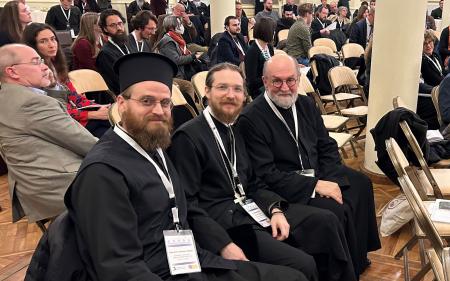
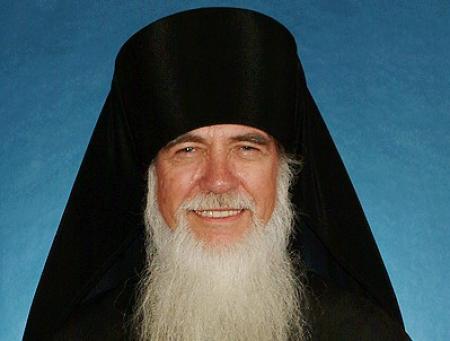
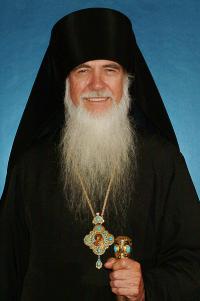
At its recent Regular Fall 2022 Session, the Holy Synod of Bishops of the Orthodox Church in America, meeting under the presidency of His Beatitude Metropolitan Tikhon, received the Albanian Archdiocesan nomination of Igumen Nikodhim (M.Div.’07) as diocesan bishop, made earlier this fall.

The Holy Synod decided to elevate Father Nikodhim to the dignity of archimandrite and named him administrator of the Albanian Archdiocese. On Sunday, November 13, during the celebration of the Divine Liturgy, His Beatitude Metropolitan Tikhon elevated Fr Nikodhim in rank according to the proper liturgical rites.

With regard to his nomination as bishop, the Holy Synod will take steps to canonically elect and ordain Fr Nikodhim to the episcopacy in September 2023. In the interim, His Beatitude named His Eminence Archbishop Mark of Philadelphia and the Diocese of Eastern Pennsylvania as the locum tenens of the Albanian Archdiocese.

Archimandrite Nikodhim was born and raised Nathan Preston in northern Idaho. For his B.A., he majored in Music and Classical Languages. He then completed an M.A. in Comparative Religion at the University of Chicago, continuing on to St Vladimir’s Seminary to begin his priestly studies and formation in the M.Div. program, and graduated in 2007. He then served as pastoral assistant and cantor at St. Nicholas Albanian Orthodox Church in Jamaica Estates, NY, while working in direct care as a social worker in Newark, NJ. Fr Nikodhim was ordained to the diaconate in 2009, and ordained to the priesthood at St. Nicholas by Archbishop Nikon (Liolin) of blessed memory in 2010.

Fr Nikodhim has continued to serve as rector and sole cleric at St Nicholas Albanian Orthodox Church since his ordination, while also taking on a number of other roles and responsibilities, including an appointment as Administrator of the Department of Pastoral Life, OCA, and as a board member of the Thriving in Ministry Program, an initiative launched by the Lilly Foundation, which aims to establish and facilitate small groups for bishops, priests and priests' wives.

In 2017, His Eminence, the Most Reverend Nikon, Archbishop of Boston and the Diocese of New England and the Albanian Archdiocese, tonsured him with the new name Nikodhim in honor of the Holy Martyr Nikodhim of Vithkuq and Berat. Fr Nikhodim was elevated to the honorary rank of Igumen (Abbot) in 2020 by Metropolitan Tikhon, Primate of the Orthodox Church in America..

This article has been adapted from OCA.org and gazetadielli.com.

PHOTO: OCA.org


Dr Rossi awarded St Innocent Medal

Al_Rossi_1

On Sunday, November 13, 2022, at the 10th Anniversary celebration honoring the election of Metropolitan Tikhon as the Primate of the Orthodox Church in America (OCA), St Vladimir’s Seminary senior faculty member, Dr Al Rossi, was honored for his lifetime of service with the St Innocent Medal (Silver Class). His Beatitude presented Dr Rossi with the award, thanking him for his steadfast service to the Church over many years. During his comments, Metropolitan Tikhon stressed Dr Rossi’s written and lived example in becoming a "healing presence," and referred to a quote from Saint Athanasius, “The Lord did not come to make a display. He came to heal and to teach suffering people.”

Dr. Rossi has been a member of Office of Review of Sexual Misconduct Allegations for a dozen years, dealing with dark and difficult issues. He is also a Board member of Thriving in Ministry, an initiative launched by the Lilly Foundation, which received a half million dollar grant to establish and facilitate small groups for bishops, priests and priests' wives. He has given keynote addresses at many conferences and led many parish retreats.

Generations of seminarians have benefitted from Dr Rossi’s presence as the resident Clinical Psychologist at St Vladimir's Seminary. He has served, and continues as a member, on the Faculty Council for 20 years. He has written two books, Becoming a Healing Presence and All Is Well. After teaching at Pace University for 24 years, he retired as Associate Professor of Psychology. Dr. Rossi also has a brief, bi–weekly podcast on Ancient Faith Radio titled Becoming a Healing Presence.

Dr_Rossi2

Seminarian from Uganda prepares for life of service

Richard-article-1

Richard Okello* (M.Div. ‘25) traveled to Yonkers, NY this summer from his hometown of Gulu in Northern Uganda, to take the next step in his longstanding commitment to service in the Church - becoming a seminarian at St Vladimir’s Orthodox Theological Seminary. Richard’s family and community are eagerly awaiting his return upon his completion of the M.Div. program, and he has many ideas and hopes for his future ministry within the Holy Diocese of Gulu and Northern Uganda, a diocese under the Archdiocese of Kampala of the Patriarchate of Alexandria. This student spotlight interview is dedicated to Richard and highlights his clear-eyed understanding of mission work and what it takes to grow a new Church community.

Richard, please tell us about your family and home country.

My parents are Roman Catholic, since during their time there was no single Orthodox church in Gulu, the Northern part of the country. My parents had six children and I am the third born child, out of four females and two male children of my parents.

I was born in 1988 and grew up when the war was ongoing in Northern Uganda between the Lord Resistance Army Rebel group and the government of Uganda, a war which was fought for approximately 20-25 years. The war inflicted much suffering and destruction on the people of Northern Uganda. There was no education for children, trauma, and economic breakdown. People have been confined in internally displaced person camps (IDP) and suffering from famine. The rebel group abducted many young children forcefully, turning them into child soldiers, and many young girls were forced to become wives of the rebel commanders, turning them into child mothers; in general, rape and sexual harassment were done to many women and the female victims of captivity by the rebels. Men died in the war or got killed for refusing to accept to fight for either the rebel or government army. I hope by your love and care towards these people, they will be, at one point, able to get healing and rehabilitation from all the unimaginable situations they have been going through due to the war.

I am married to Winnifred Ayaa, my wife. We are blessed with two children, a girl and a boy, Anastasia and Alexander, five and two years old, respectively. They are back in Uganda while I am here studying at St Vladimir’s Seminary for three years, God willing. I ask for your prayers for me and my family back home during this long period of being away from home.

Richard article 2

Please tell us about your personal journey into and within the Orthodox Church.

I converted from Roman Catholic to Orthodox in 2006 (16 years ago) at the age of 18, at St Basil Orthodox Church,  now the new Holy Diocese of Gulu and Northern Uganda. Later, I served the Orthodox Church as a youth organizer, holding a leadership role in the parish council representing the youth. More recently, I served as the chairperson of the organizing committee at St Basil church, a choir member, and teacher. I also worked with a mothers union in another sister parish, St Nectarios Orthodox Church, as a coordinator for their sewing (tailoring) project. We started this group activity for the women so that they can earn a living and support their children, as well as the orphans and widows of the prolonged war in Northern Uganda. They support many children who lost their parents and women who were either former child soldiers, former wives to the rebels, or child mothers due to rebel abduction.

My country has a largely Christian majority - 85% of the population. Roman Catholics have the greatest percent, followed by Protestants; Muslims are growing fast and Orthodox have the smallest component of 0.1%. Much work needs to be done for the Orthodox Church to grow in Uganda, especially in Northern Uganda where I come from, the city of Gulu.

What is your pre-seminary educational and professional background?

I am a teacher with a Bachelor’s degree in Arts Education and Humanities from Gulu University, where history was the major I specialized in, and I also studied Christian religious education. My studies have been possible with the help and support from generous American people who believe that every human being deserves the love of Christ through practical faith with action, through their extension of a helping hand in contributing to my tuition fees. During missionary visits, the people who came from America to Gulu left a footmark in Northern Uganda. Their contribution is facilitating the building of the Orthodox faith in Northern Uganda and the improvement of the human condition of living, especially through providing educational opportunities, not only to the Orthodox, but also to the most disadvantaged group of people in general, the people who sometimes have no hope in their lives: the needy, the orphans, widows, women, and the young boys and girls.

I am a professional teacher in general world history, African history, and European history. I taught for five years at Holy Archangel Michael Middle and High School, one of the schools built by International Orthodox Christian Charities (IOCC) and the St Nektarios Education Fund. Unfortunately, Covid-19 affected the school negatively; the school is open, but the number of students has not returned to pre-covid levels, so the teachers' salary is a problem - the school can not afford to pay the teachers.

Richard article 3

What is your current program of study at St Vladimir's?

 I am a first-year student, who started the M.Div. ordination track program at St Vladimir’s Orthodox Theological Seminary in August 2022. Covid-19 disrupted my enrollment in 2020 and 2021, since borders were locked and the US Embassy closed, and no one was allowed to go for an interview appointment to get a US student visa.

I am so grateful, humble, and appreciative to St Vladimir’s Seminary administration, stakeholders, and benefactors for being the light and the voice of the voiceless people in Gulu, Northern Uganda, in particular through the scholarship St Vladimir’s Seminary gives to African students. This shows the true love and generous heart of the American people towards the Church and to the people of Africa. This initiative will revive the development of Orthodox faith in my country and in Africa as a whole.

What is your daily life like at St Vladimir's Seminary?

In my daily life at St Vladimir’s Seminary, I am experiencing the spiritual aspect that is developing me holistically into a prayerful person, through daily prayer and continuing to learn new spiritual life and growth.  I appreciate the treatment given to students at the Seminary by the professors during classes in a practical way and psychological support to new students in a new environment, new culture, from a totally different background - I, for one, am getting the necessary academic guidance and mentorship I need so much. Thank you to all my professors for your dedication, devotion, and commitment to your service to this seminary. We continue to strive for the Glory of the creator.

Richard-article-4

What are your future plans after graduating from SVOTS?

The future of the Orthodox Church in Gulu and all of Northern Uganda demands collective effort from all people of goodwill, and practical love of Christ from every person who feels touched by this call of transforming the world as the Bible says, that God may make it a better place to live in.

I hope to be teaching people to gain the truth about Orthodox faith, which is very essential for the Church, building a church where people can worship and assemble for spiritual growth, with the goal of continually expanding the Kingdom of God through orthodox faith, and showing a practical love of Christ to those who are touched by the unceasing love of Christ.

A continuing call for education of our people of all school-going ages shall be very instrumental for the Orthodox growth in Northern Uganda. Educational opportunities make the future of the Church come alive.

Seminary education for more students is crucially needed to meet the gap in the number of priests, lay leaders, administrators of the church, teachers, and theologians, to keep our faith alive and maintain its true glory.

I will also be organizing the community and identifying activities that can transform and develop them spiritually in faith, as well as developing social support activities and activities that support the community economically. I believe it is important to build self-esteem in others by recognizing God’s gift in individual people, gifts that must all be used to promote his Glory with both humility and confidence.

It is important to try to rebuild the lost hope in people's lives and to heal the trauma caused by the effects of the prolonged war in Northern Uganda.

Serving the people is at the center of my heart, and this basic conviction builds a good ground for the Orthodox faith. I hope to serve the people meaningfully by healing both soul and body through meeting both spiritual and bodily needs, which are all significant, and to have the ability, capability, and wisdom for able discernment of our Orthodox faith.

 Name Richard article 5

Another important priority will be working for  the unity of the Church, with a sense of mutual understanding of the diversity of our faith, but still serving the same Christ who loves every person regardless of their background. We will need to carefully identify the necessary initiatives, interventions, and projects. For example, conduct dialogues with the stakeholders and leaders of our Orthodox Church for a lasting conducive environment for the Orthodox faith in Uganda.  I will strive to always discern the Orthodox faith with beauty and respect for the diversity and status of the people, who, by our actions, we can bring to believe in the unending love of Christ. I want to extend His love to the people whom God will bring to me, so that they achieve their salvation.

 I look forward to the unity of the church and the united body of Christ. As Orthodox faithful we learn to live with new people joining our faith. I give big thanks to St Vladimir's Seminary for having a great mix of students here on campus, which shows a very healthy visionary leadership, aimed at uniting every Orthodox faithful.

I dream to have a seminary in Uganda cooperating with St Vladimir’s Seminary in many aspects of academics, theology, leadership, manpower development, human resource development, and management needed for the growth of the Church, a sustainable Church - able human capital for our Orthodox faith.

Richard-article-6

Other important missionary initiatives will be to create employment opportunities for the young, uneducated youth by putting up life-skill vocational training schools. This will minimize idleness, aim at reducing crime, help the street children, and build self-awareness among the youth. We will need to continue advocating for peace in Uganda among the people,  working to build a healthy community with love for one another within a stable church of Christ, to promote mutual co-existence between cultures that can live in peace and love.

One more important goal is to build a translation center for our Orthodox texts to the language which our people can understand, read, and write. This work will enable us to continue the work of reaching the people who may, by God’s grace, realize the true Orthodox faith.

Thank you once again to St Vladimir’s Seminary for shining light on the Orthodox faith; for aiming at bringing more mutual unity between different traditions within the Orthodox Church, by championing meaningful engagement; and for being role models in cultivating the spirit of faith with action, by training more seminarians who will forever serve the church, continuing the work of Christ in the realization of the salvation of the world.

Thank you again to the generous American people who care so much about the seminarians’ well-being at the Seminary, who care so much and support the various scholarship programs with the vision to bring more African students to study at this high-level seminary, to be transformed spiritually and return home to serve the people in Africa.

With much love of Christ, a Ugandan student,

RICHARD OKELLO

Donate Now


*Now Dn Richard, ordained 7 January 2024 at St Basil Orthodox Parish in Gulu, Uganda. Dn Richard will return to his family and home community to serve as a missionary priest after completing his studies in Summer 2025.

In Memoriam: Richard Schneider

professor_schneider

Richard Schneider (1938–2022) fell asleep in the Lord on the evening of November 11. Professor Schneider enjoyed a long teaching career, including two decades spent at St Vladimir’s Seminary as Professor of Hermeneutics and Liturgical Art. He was initially invited in 1995 by Fr Thomas Hopko to lecture on iconology, and, beginning in the 2001-2002 academic year, he returned every spring semester until 2019 to teach a variety of subjects, including iconology, hermeneutics, church history, and academic writing. His courses were perennially popular, and he opened up the eyes of many Christians to begin to read the iconography, architecture, liturgy, and tradition of the Church for themselves.

During his time at St Vladimir’s, he was a vital member of the community. Professor Schneider lived in the dorms, ate meals with students, led trips to museums and concerts in Manhattan, and always engaged seminarians in thoughtful and provocative conversations. He was notable in his dedication to students, and could be found at almost all hours either grading assignments or meeting with students to discuss their written work. He was beloved by generations of seminarians, advised dozens of theses, and encouraged many students to pursue further doctoral studies.

Professor Schneider lived a rich life. He was born into a Jewish family in St Louis, MO, converted to Roman Catholicism as a young man, and eventually joined the Orthodox Church. He completed his undergraduate studies at Dartmouth College in 1959, did graduate work in musicology at Princeton University (MFA ‘61), and in art history at Columbia University (MPhil ‘63).

In his academic career, Professor Schneider was primarily a professor of history and church history at York University in Toronto, with teaching stints at a few other universities before York, as well. He also established the program in Orthodox Theology at Trinity College, University of Toronto, where he taught until spring 2022. He represented the Archdiocese of Canada on the Metropolitan Council of the Orthodox Church in America, and served on the Canadian Council of Churches for decades,representing the OCA. He was devoted to the cause of Christian unity, and served as president—the first Orthodox president in its history—of the Canadian Council of Churches from 2003 to 2006. Above all, Richard Schneider was a man of deep, personal faith, who embodied and represented for many the gentleness, forgiveness, and love that he and they experience in Christ.

Professor Richard Schneider is survived by his wife, Lisa, and 7 children. May his memory be eternal!

Read In Memoriam by Dr Peter Bouteneff


All services for Prof. Richard Schneider will be held at St. Elias the Prophet Ukrainian Greco-Catholic Church and cemetery (10193 Heritage Road / Brampton, ON L7A 0A1). All who wish to say goodbye and pay their respects are welcome. 

Please note that several members of Richard's family are severely immuno-suppressed. COVID-19 social distancing and masking rules will be followed. If you have been exposed to COVID-19 or seasonal viruses in the past 7 days, or if you have symptoms of COVID-19 or seasonal viruses, we ask you to refrain from attending.

Memorial Service (Panikhida)
Thursday, November 17, 7 PM EDT
Visitation following the memorial service with reading of the Psalter until 9PM EDT

Funeral and Burial
Friday, November 18, 11 AM EDT
 

In lieu of flowers, Richard's family have expressed that donations to Holy Myrrhbearers Orthodox Mission, St Mary of Egypt Refuge, or St John the Compassionate Mission would be greatly appreciated.

Rethinking Sacred Arts Symposium

SVOTS Hosts 1st Annual Academic Symposium

Saint Vladimir’s Orthodox Theological Seminary (SVOTS) hosted its 1st Annual Academic Symposium on October 27-29, 2022. The Symposium topic, Liturgy and Theology, drew leading scholars in liturgical theology from around the globe, each of whom gave talks presenting their own research in the field. The opening event of the Symposium was a public keynote address held in the Metropolitan Philip Auditorium, by the Rev. Canon Maxwell E. Johnson, PhD, a leading voice in the academic field of liturgical theology. The talk was well attended both in person, by Seminary Faculty, staff, and the student body at SVOTS, as well as online, with over 150 participants streaming the presentation via Zoom.

Audience in attendance at keynote address

Professor Johnson entitled his talk Lex orandi est lex credendi: Alexander Schmemann’s Liturgical Theology in Ecumenical Context. He opened his talk by speaking to the unique contributions Fr Alexander Schmemann made to the field, “especially his use of the formula ‘lex orandi est lex credendi’  and his articulation of the Ordo as the basic underlying structure and theology of liturgy, in relationship to the classic articulation of ‘ut legem credendi lex statuat supplicandi’ of Prosper of Aquitane.”

Audience at keynote address

The Latin phrase in the title of Dr Johnson’s address is most commonly cited as Lex orandi, lex credendi - i.e. “the law of prayer, the law of belief,” implying that the set ways in which Christians pray and worship are related to their beliefs and dogma. However, Dr Johnson proposed, Fr Schmemann’s approach to liturgical theology necessitates the emphatic addition of the est.  Not only is Christian liturgical prayer and worship related to Christian beliefs and dogmas, but Christian worship actually is Christian belief - the beliefs of the Church are embodied by the liturgical worship of the Church - the two are inseparable, according to Fr Schememann’s view.  

Dr Johnson went on to describe several ways in which he believes some modern liturgical theology scholars have misunderstood Fr Schmemann, and elaborated on possible directions for the field of liturgical theology to grow and expand in the future.

Watch the keynote address recording

Roundtable Discussion with all presenters

The remainder of the 1st Annual Academic Symposium at SVOTS was held in-house, in order to facilitate the high volume of scheduled presentations followed by in-depth dialogue between the invited scholars, SVOTS Faculty, and seminarians. The following speakers gave presentations during the in-house portion of the symposium:


Saying “Yes” to the Church: A Conversation with SVOTS Trustee Dan Abraham

Dan and Kathy Abraham

As long as he can remember, businessman and St Vladimir’s Seminary Trustee Dan Abraham’s life has been integrated into both the local and national Church, from his beginnings as an acolyte at St Nicholas in Grand Rapids, MI, where he still is involved today.

In addition to serving as a St Vladimir’s Seminary Trustee, Dan is a member of his Parish Council, a Trustee of the Antiochian Archdiocese, and a Director of the Orthodox Christian Leadership Initiative. In his former role as Chair of the Order of St Ignatius in his Archdiocese, he traveled all over North America encouraging people towards generous philanthropy. 

 In 2021, Dan almost died of COVID-19; through his near-death experience, forty days in a coma, and subsequent recovery, Dan was upheld by his lifelong faith and the prayers offered by the clergy and faithful all around the U.S. Through Zoom and email, Dan shared his unique perspective with us as a Trustee and experienced leader and fundraiser in the Church.

As a lifetime Orthodox Christian, what have been the highlights in your spiritual journey

I grew up in a typical Middle Eastern family church environment; along with my four sisters, we were the third of what is now five generations of our family to participate at St Nicholas in Grand Rapids, MI. We are firmly rooted. My parents’ social friends were their church friends and their connections were in the Church.

My parents were very devout. I remember the first day on a Palm Sunday when I became an Altar Boy after months of practice. A lady in our church made our robes by hand. I was 7 or 8 years old, and was thrilled to participate in the Great Entrance for the first time. My father kept a very disciplined fast and as I entered my teen years I started to emulate him. I still remember the oration I gave when I was 15. The topic was "My Priest and Me." 

Give us a sketch of your professional life.

I earned a bachelor degree from the University of Michigan, then an MBA from Western Michigan University and a degree in Law from Thomas M. Cooley Law School. Working during the day, I attended school at night and did my studying early in the morning before work. Nobody forced me; I did it because I wanted to, and I am proud of accomplishing that.

Once I was done with school I jumped in with both feet to the family businesses. My family life included my father's two brothers and their families; they continued the business my grandfather started. It evolved into a large wholesale grocery distribution company. In 1982 we purchased one of our retail customers, which I was assigned to manage for 30 years.  During this time I started a manufacturing business, which I eventually managed exclusively after leaving the family firm. Our main customer channel was school and sports fundraising; through this, I accumulated 30 years of business fundraising. 

As a young married couple, how did you first become active in Church leadership?

Kathy and I have been married for 35 years. Right from the start, my new wife was very active in church and she pulled me back into the church after my years of graduate school and career development. 

When we got married, Kathy was very involved in the Fellowship of St John Divine leadership (the former Antiochian young adults organization). We were nudged to become members of the Order of St Ignatius, and then I was asked to serve on the national council. From there I moved up the ranks.  One of my proudest moments was when Metropolitan Philip of blessed memory asked me to be the Chair of the Order of St Ignatius after serving for 25 years as Chair of Membership Development.

I’m concerned that today’s young adult world is so dominated by secularism and people are being pulled away from the Church. Because I was raised in the Church, it was natural for me to stay with it later. There were times when Kathy and I were away from each other even on our anniversary, due to church responsibilities!

How have you been shaped by the battle with COVID-19 that brought you to death’s door?

I came within four hours of death, but God chose I should live. After my illness, I realized that God chose me to live and I had to ask myself why? Why me? I began to be reconciled with the knowledge that we don’t know why God does what He does. We have to accept that he chooses some to live, and some to pass on. For a while after my near-death experience, I struggled that I wasn’t the person I used to be, and there was an empty feeling. It took time and patience for me to let God administer the healing that He brings. 

Slowly my heartbeat and my deep breathing came back, I regained strength in my muscles, and my damaged vocal cords began to heal. Writing was hard, talking was hard; all of the rehab had to happen simultaneously. Thank God I’m a lot better than I was! 

Every day I ask myself, “What are your plans for me, Lord?” I lost my business and most of my assets, yet God continues to lead me on a path of service. The question that all of us need to ask every day is, how do we tune in to His will? It’s something that we have to work towards as we begin to understand how He transforms us. So maybe part of my purpose is to share with others what I learned through my experience and what it can mean to others. There is suffering all around us, but we can learn from our suffering and can find relief from it by trusting in God’s will. 

You keep busy with family, your parish, and your business life; so why did you say yes to serving as a SVOTS trustee? 

The short answer is Fr Chad invited me and I can never say no to the Church. The timing was interesting: I was elected at the November 2020 meeting and it was just a few months later that I was hospitalized for 120 days with COVID-19. Today I view one of my most important responsibilities as serving St Vladimir's Seminary. I hope to continue as a Trustee and as a positive contributor in the future. 

All of us are significantly impacted by the dominant secularism in our country. Unfortunately, we also see fundamentalism growing as well which is not necessarily a good direction. More than anything, we need balanced young men who will dedicate their life to Christ. 

What did you learn as a longtime leader within the Antiochian Orthodox Archdiocese that is complementary to your leadership role at St Vladimir's? 

I traveled extensively for the Order. I met many people over those years, many of who are still friends today. Early on I discovered that I was most successful when I invited people to join in the cause of generosity. Everyone wants to feel wanted, needed, and important. Orthodox Christians who give are inherently generous people and if we can help connect them with our cause we increase the likelihood of the individual making a donation. Raising money for the church theoretically should be very easy, once we understand what’s behind the giving.

Giving to the Church is very different from giving to the Cancer Society or disaster relief. When you give to the Church, God multiplies that gift. He takes our gifts, and then the equation is 1 + 1 = 3 in His eyes. That’s how we multiply our impact; we combine our resources and work together, and God gives the increase..

What have you learned about the Seminary in your time as a trustee that you didn't know before? 

Stewarding the whole enterprise that is St Vladimir’s Seminary  is much more complex than I imagined; this was apparent to me from my first Board meeting. Hopefully, I can contribute to the compelling vision that is currently guiding Seminary leadership. Training men and women of all ages how to serve Christ through the Church is such an important reason for existence. 

Those who work and give their life to the Seminary are amazing people who are filled with the love of Christ. The stellar accomplishments of our Board of Trustees are impressive. 

There are so many aspects of the school. For one thing, meeting the requirements and traditions of the various jurisdictions is very complex. As an institution of higher learning, St Vladimir’s Seminary functions as a university with housing departments, community concerns, and classroom experience with highly skilled professors. Additionally, SVOTS administers other programs like Ed Day to bring ongoing educational opportunities to the general Orthodox public, while also producing books and audio resources. Those entrusted with leading the Seminary carry a heavy weight on their shoulders. 

How would you describe the key challenges and opportunities the Seminary is facing as we approach the 85th anniversary? 

The overriding challenge of not just the Orthodox Church but Christianity in general is the power and influence of secularism. We simply can't avoid it but we can resist its temptations if we are properly instructed both at home and through the Church. While its primary objective is to teach theology, St Vladimir’s Seminary is also looking more seriously at teaching seminarians about leadership, administration, and public speaking. We simply cannot minimize the impact of these three characteristics. A man can be the most pious Orthodox priest, but if he cannot lead and administer, his success at parish life will be limited. 

For people considering a gift to SVOTS I would say: You take it for granted that if your priest retires or moves on that there will be someone there to step in. Without St Vladimir’s Seminary, this wouldn't be the case. We also need the resources to reach out to young men, to open their minds to a future life of serving the Church. There are many worthy organizations, but the Church should always come first in our giving. 

From your perspective, why should someone consider being a regular donor to St Vladimir’s Seminary? 

Today we “compete” with many Christian and non-Christian organizations. We must lay a strong financial foundation for future viability. Every Orthodox Christian will be impacted by the caliber of education and successful formation produced by our seminaries, particularly St Vladimir's Seminary. 

And every $25.00 donation is as important as the $100,000 donation! We must all be invested in the future of our faith in America. Generosity comes from the heart—God calls us to be cheerful givers. 

Give to St Vladimir's Seminary

In Memoriam: Great Economos Antony Gabriel

Fr_Antony

With faith in Christ and hope in the resurrection, we share news of the repose of Great Economos Antony Gabriel, an alumnus of St Vladimir’s Seminary (M.Div. ’62). Fr Antony Gabriel’s priestly ministry spanned six decades, four parishes and a host of Antiochian Archdiocesan organizations. He reposed in the Lord on Wednesday, November 2, in Tucscon, AZ, at the age of 82.

Fr Antony was born in Syracuse, New York. He attended St Vladimir’s Orthodox Theological Seminary (SVOTS) immediately before its relocation from its former housing at Union Theological Seminary in Manhattan to the present campus in Yonkers, NY. He studied under foundational SVOTS professors such as Fr Alexander Schmemann, Fr John Meyendorff, Dr Veselin Kesich, and Dr Nicholas Arseniev, and shared a room with Fr Thomas Hopko for a time. Upon the occasion of his retirement in 2015, Fr Antony reflected on his time at St Vladimir’s Seminary in an article for the Antiochian Archdiocesan website, describing daily life in the early days of the Seminary in many poignant and humorous vignettes.

Fr_Antony_Liturgy

After graduating St Vladimir's Orthodox Theological Seminary in 1962, Metropolitan Antony Bashir ordained him to the holy priesthood and Fr Antony began his first parish assignment at St George Church of Phoenix, Arizona. Fr Antony later served St Elias Church of Sylvania, Ohio and founded St George Church of Cicero, Illinois before serving at St George Church of Montreal, Quebec, which he pastored for more than 30 years.

In Montreal, he facilitated the welcomes and relocations of Lebanese refugees from their homeland's "uncivil war," as Fr Antony called it, in the 1980s. He did the same for Syrian refugees fleeing the war in their homeland in the 2010s. St George Church doubled in size to 1,000 families during his tenure, and he helped establish St Mary Church in Montreal.

In 1976, Fr Antony was a founding member and the first chaplain of The Order of Ignatius of Antioch. He also organized the Department of Conventions and Conference Planning, created the Antiochian Heritage Foundation, and lectured on Antiochian Church history at the Antiochian House of Studies.

Dr_Antony_MetPhil

Fr Antony often accompanied Metropolitan Philip Saliba to the Middle East. Sayidna Philip led the celebrations of Fr Antony's 50th anniversary in the holy priesthood in 2012. Fr Antony retired from active ministry in 2015 and moved to Tucson, Arizona.

Funeral services are pending. Please keep Fr Antony in your prayers for the departed and his wife, Kh. Lynn, and their family in your prayers for the living. 

May the memory of Fr Antony Gabriel be eternal!


This article was adapted and reprinted from Antiochian.org.

Teens Meet Seminarians at Fall Retreat

teen_svots

On October 22, over one hundred teens and parents gathered at St Vladimir's Orthodox Theological Seminary (SVOTS) for a Teen Society of Orthodox Youth Organizations (SOYO) retreat, hosted by St Mary's Antiochian Orthodox Church in Brooklyn, NY.

Fr Nicholas Belcher (M.Div. '05, former lecturer on Antiochian Liturgics) gave the primary talk for the retreat, encouraging the teens in living out their faith with the support of a “matrix” of godly friends, teachers, and spiritual advisors. Fr Nicholas is Chair of the Youth & Young Adult Ministry Task Force for the Antiochian Archdiocese, former Dean of Students at Hellenic College Holy Cross, and an experienced counselor and speaker for youth programs and events.

Following the main talk, ten SVOTS seminarians from the Antiochian Archdiocese and three from the Orthodox Church in America (OCA) shared their experiences at the Seminary with the teens. The male and female seminarians who spoke represented a diverse cross-section of the SVOTS student body and several of the degree programs offered at St Vladimir’s Seminary. Students introduced themselves, talked about the daily routine at Seminary, and discussed their decision-making process in coming to study at St Vladimir’s.

Dn Joseph Thornburg (3rd year, M.Div.), reemphasized Fr. Nicholas Belcher’s earlier point about cultivating a “matrix of people you can go to, who can speak into your life, and pray with you through the difficult choices” in discerning a possible vocation in Church ministry.

“When you’re doing the thing that God wants you to do, he creates the path for you,” Fr Nicholas Fine (3rd year, M.Div.) remarked, encouraging the teens to seek out their future paths with trust in God.

After a lively discussion with SVOTS seminarians, the retreat participants enjoyed lunch on the seminary grounds and participated in various service projects to help beautify the campus. Service projects included picking up trash along the roadside bordering the campus, as well as putting together furniture.

To close out the day, the group celebrated an early Vespers service in Three Hierarchs Chapel, with the teens joining seminarians in reading and chanting.

New Podcast Shares Seminary Homilies Weekly

give-me-a-word

Saint Vladimir’s Orthodox Theological Seminary (SVOTS) is now partnering with Ancient Faith Radio to share homilies recorded live during services on campus, in a new podcast called Give Me a Word, Homilies from Three Hierarchs Chapel.

Featured clergy include SVOTS Faculty, honored guests, and students. The podcast is set to be released weekly, offering an opportunity for the wider SVOTS community and alumni to stay in close communion with life here at the Seminary.

Give Me a Word is available to stream via Ancient Faith Radio, or via the Apple Podcasts app.

Click here to listen

Subscribe to