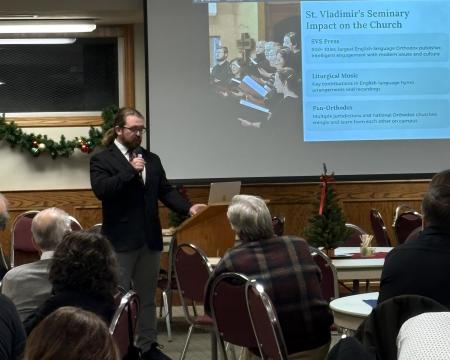
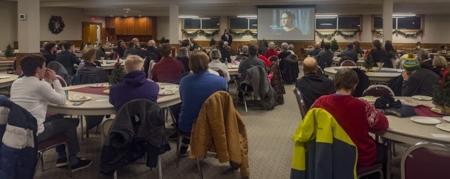
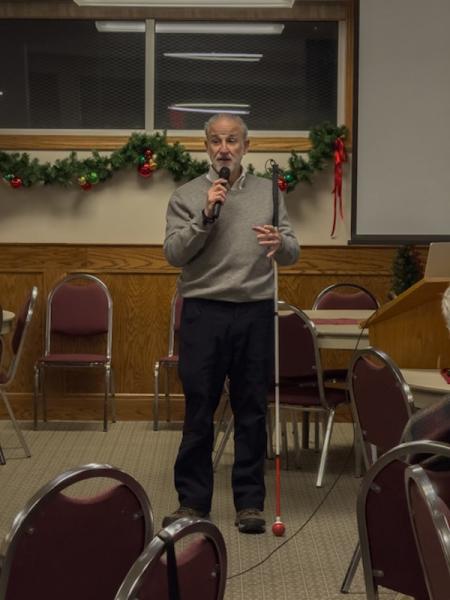
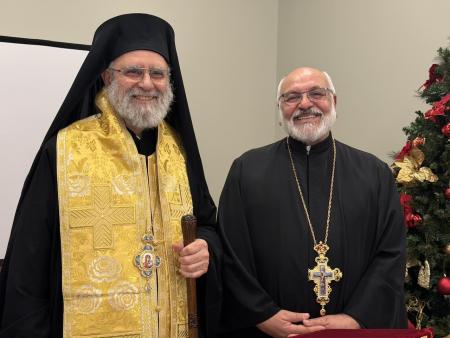
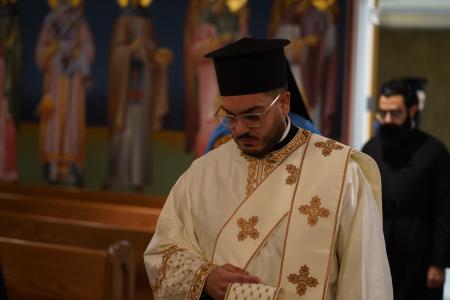
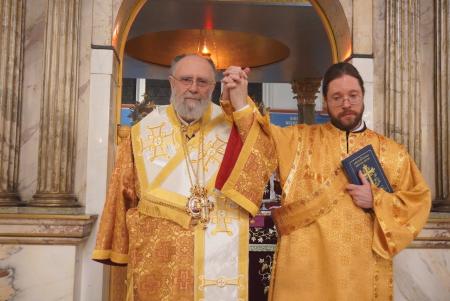
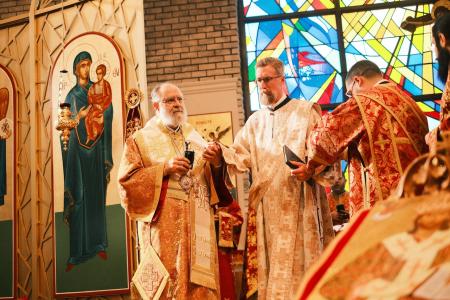
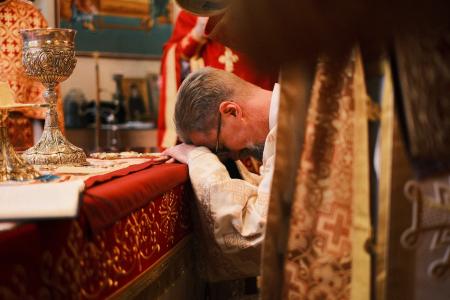
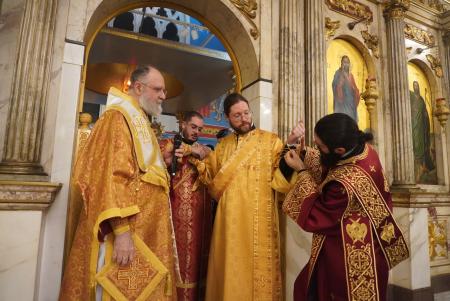
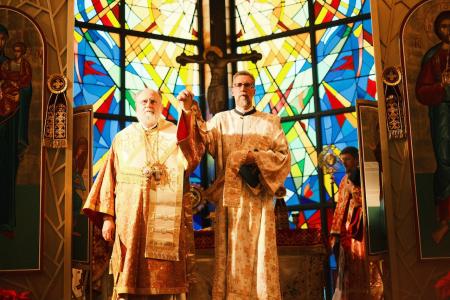
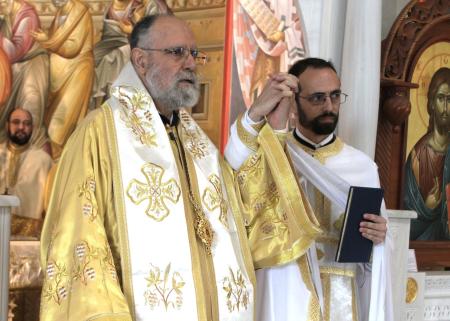
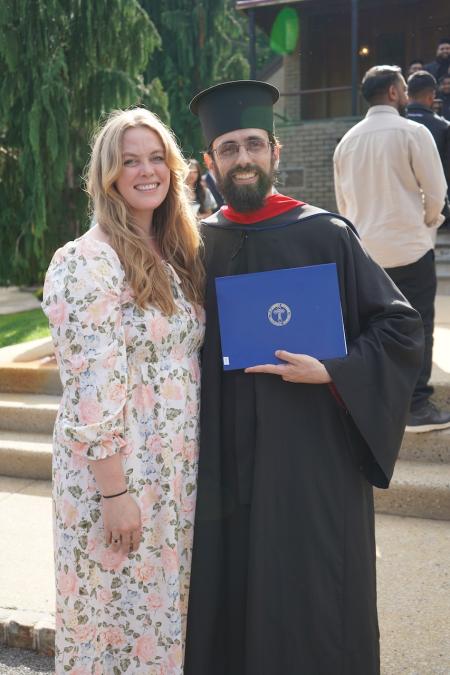
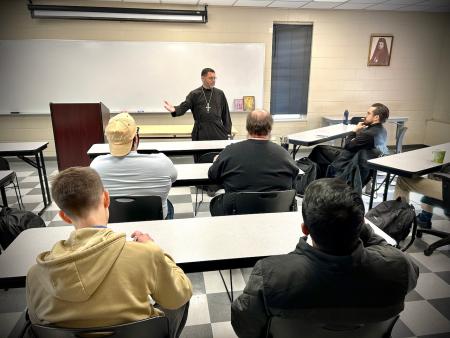
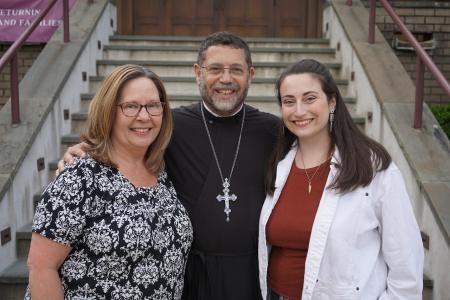
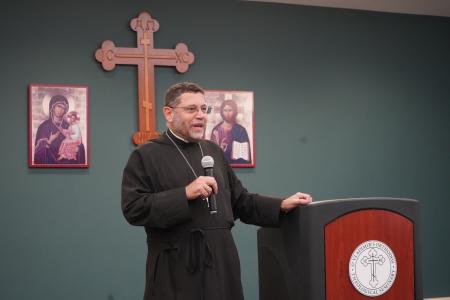
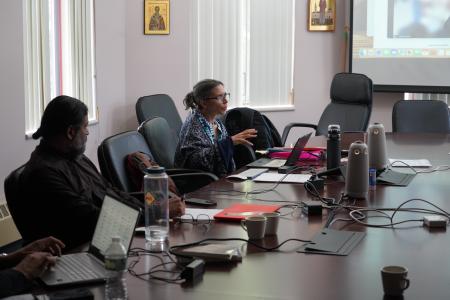
The Cathedral generously hosted a special presentation by the Seminary and reception on Saturday, December 13. Dean Dr. Ionuț-Alexandru Tudorie, Associate Dean Dr. Peter Bouteneff, and Director of Admissions and Alumni Relations Zachariah Mandell shared insights into the Seminary’s latest developments and answered questions.
The day before, on Friday, December 12, St. Vladimir's Seminary alumni from parishes across the Twin Cities gathered for a cozy reception, hearing about the state of the institution and sharing cherished memories from their time at the Seminary.
“It was such a joy to be back at St. Mary's, and to see and talk to so many friends, Seminary alumni, and interested folks from across the Twin Cities,” said Mandell, who served as choir director at St. Mary’s before he joined the staff at St. Vladimir’s. “St. Mary’s is as hospitable as ever, and the Orthodox churches in the Cities remain a shining example of a healthy Pan-Orthodox community.”
“It was a wonderful, cold day when the leadership of St. Vladimir's Seminary came to Minneapolis for a visit. The positive momentum and clear transparency was palpably exciting for everyone in attendance,” said Paul Karos, a St. Mary’s parishioner and supporter of the Seminary who also wrote the new SVS Press book, The Ultimate Building Project: The Human Person. “As an author, it was humbling for me to now be published by such an honorable institution in the life of the Church. We simply want to say ‘thank you’ for sacrificing in making the trip to visit us!”
Paul Karos is a retired Wall Street executive who holds a degree in Orthodox theology.
The occasion also served as a nod to the historic role Minneapolis played in Orthodox theological education in North America. In 1905, Archbishop Tikhon, later Patriarch of Moscow (+1925), recognized the need for American-born-and-raised clergy and decided to establish a permanent seminary. Opened in 1905 in Minneapolis, it was transferred in 1913 to Tenafly, NJ, and renamed St. Platon’s Orthodox Theological Seminary. During the eighteen years of its existence, it produced two generations of priests who, at a difficult moment in the life of the Church, assured the continuity of Orthodox Christianity in America and its progressive integration into American life.
The Seminary’s visit to Minnesota was facilitated by St. Mary’s clergy, including the Cathedral’s Dean Fr. Andrew Jarmus and Seminary Trustee Dn. Philip Wagner, along with other members of the St. Mary’s community including Trustee Emeritus Dr. Frank Cerra.
If you are interested in bringing members of St. Vladimir’s Seminary to your parish, or want to learn more about getting your parish involved in the mission of the Seminary, visit our Parish Partners page and contact Ginny Nieuwsma, Chief Advancement Officer, at ginnyn@svots.edu or (914) 961–8313 x317.
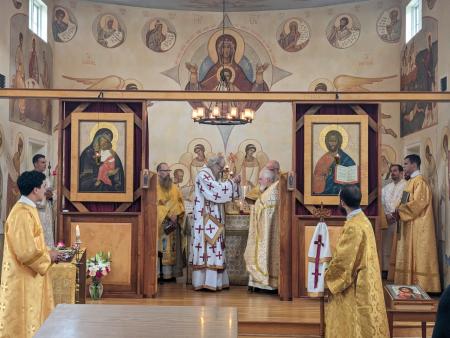
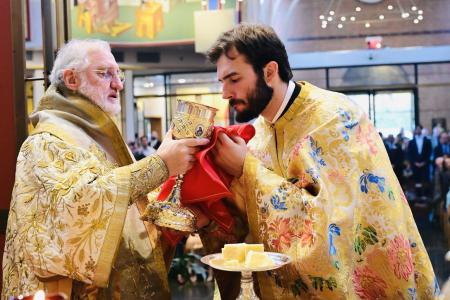
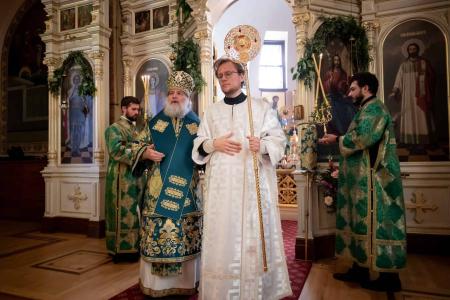
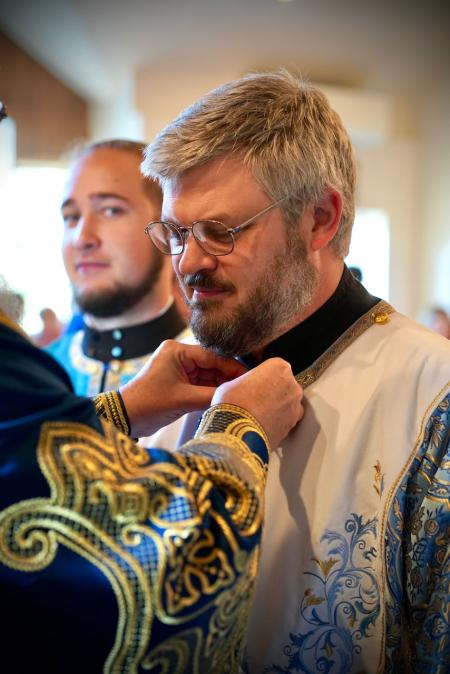
Giving glory and thanksgiving to God, more seminarians and alumni were ordained to holy orders at the conclusion of 2025 and the start of the new year. In addition, two alumni priests were elevated in rank.
HOLY PRIESTHOOD
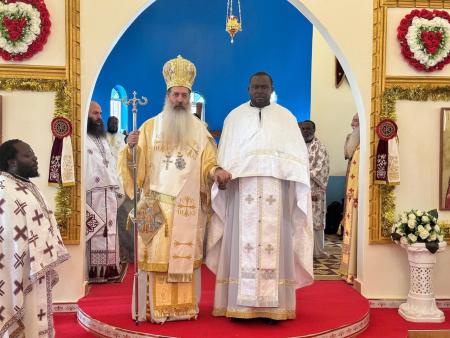
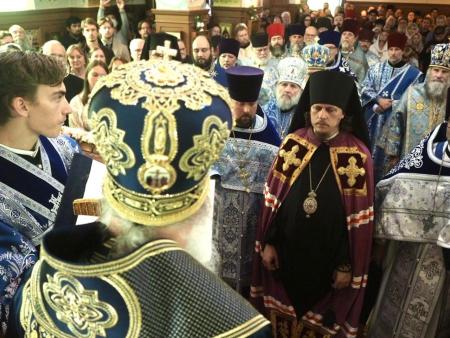
In east Africa, Seminary alumnus Dn. Richard Okello (M.Div. ’25) was ordained to the Holy Priesthood on December 28 at the newly consecrated Holy Temple of St. Nicholas in Akonyibedo, Gulu City, Uganda. Father Richard serves the Holy Diocese of Gulu and Northern Uganda (Greek Orthodox Patriarchate of Alexandria). His ordination was presided over by His Eminence Metropolitan Symeon of Fthiotida (Church of Greece).
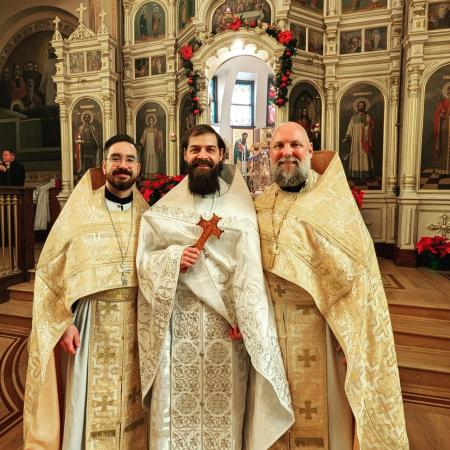
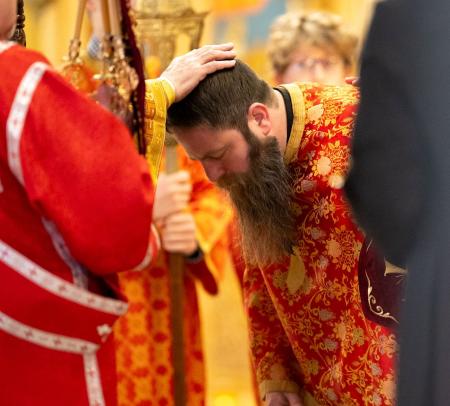
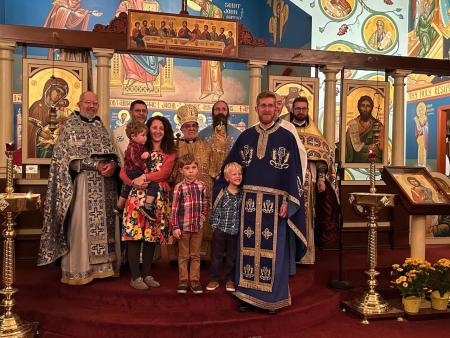
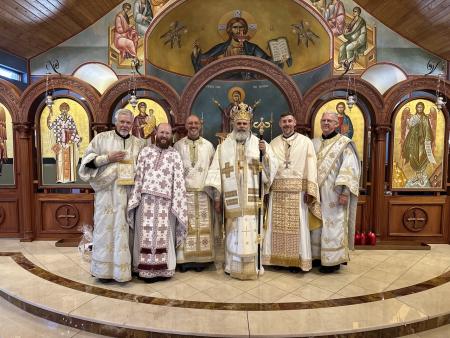
On the Feast of Theophany, January 6, third-year seminarian Dn. Jarrod Huffman (M.Div. program) was ordained a priest by the hands of His Eminence Archbishop Daniel. The newly ordained Fr. Jarrod is a seminarian of the Orthodox Church in America’s Diocese of the Midwest. The ordination took place at Holy Trinity Orthodox Cathedral in Chicago.
Fr. Jarrod (center) is pictured with fellow seminarian Fr. Jonathan Reavis (left) and Seminary alumnus Fr. Justin Mathews (photo courtesy of Fr. Justin).
HOLY DIACONATE
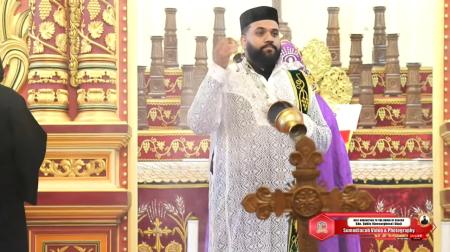
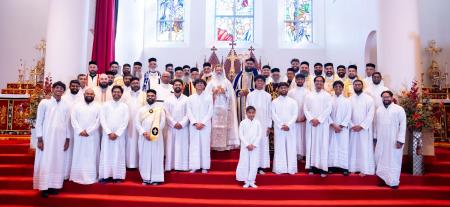
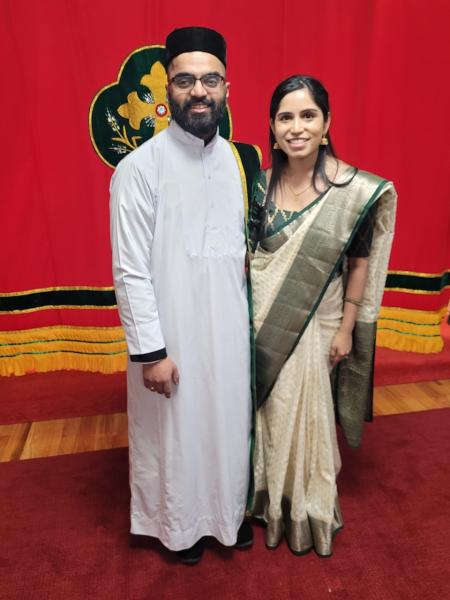
Another alumnus, Subdeacon Subin Shaji(M.Div. ’22), was ordained to the Holy Diaconate a few days earlier on January 3. Deacon Subin’s ordination was presided over by His Eminence Mor Titus Yeldho, Archbishop of the Malankara Archdiocese of the Syriac Orthodox Church in North America.
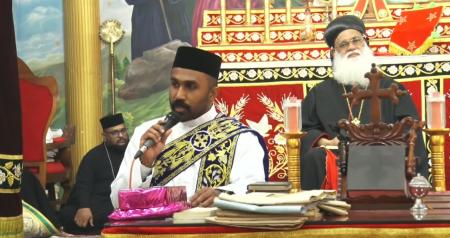
Third-year seminarian Emil Prisquilas Peter (M.Div. program) was tonsured a subdeacon in his native India, at St. Thomas Orthodox Cathedral in Kalyan West in the greater Mumbai area. Subdeacon Emil is attached to the Diocese of Bombay of the Malankara Orthodox Syrian Church, under His Grace Bishop Geevarghese Mar Coorilos.
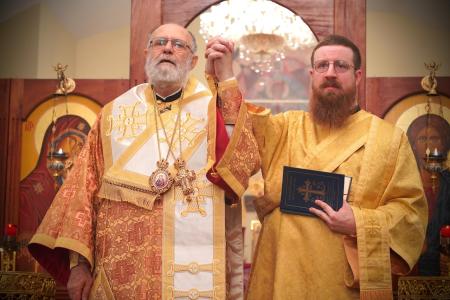
Two alumni of the Antiochian Archdiocese were elevated to the dignity of Archpriest. Father Lucas Rice (M.Div. ’11) was elevated by His Eminence Metropolitan Saba during His Eminence’s visit to Fr. Lucas’s parish, St. Michael Church of Louisville, KY, Jan. 2–4.
Metropolitan Saba then traveled to St. James Church of Loveland, OH, Jan. 4–5, where he elevated its pastor, Fr. Nabil Fino. Father Nabil studied at St. Vladimir’s Seminary in 2002 and 2003, following his graduation from Birmingham Theological Seminary.
Two St. Vladimir’s Seminary alumni were ordained in recent weeks in the Malankara Orthodox Syrian Church.
On November 8, Dn. Geevarghese (Argey) George was ordained to the Holy Priesthood by the hands of His Grace Thomas Mar Ivanios, Bishop of the South-West American Diocese. The ordination took place at Fr. Geevarghese’s home parish, St. Mary’s Malankara Orthodox Church in Farmers Branch, TX.
The Rev. Geevarghese studied for three years in the Seminary’s Master of Divinity (M.Div.) program, and completed his third year in 2025. He has been assigned as Pastor of St. Thomas Malankara Orthodox Church in Pompano Beach, FL.
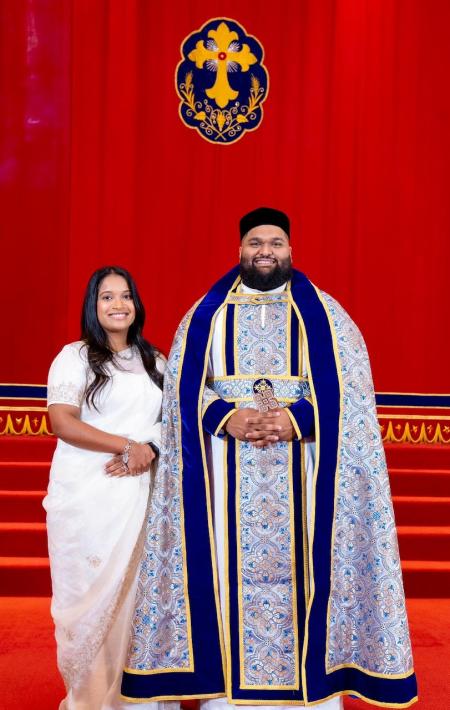
Fr. Geevarghese and his wife, Riya Kochamma (Kochamma means “little mother”).
Alumnus Subdn. Mathew (Royce) Mathew was ordained to the diaconate on Saturday, December 13. His Grace Zachariah Mar Nicholovos, bishop of the Northeast American Diocese and appointed hierarch on the Seminary’s Board of Trustees, presided over the ordination at the chapel of the diocesan chancery in Muttontown, NY.
The Rev. Dn. Mathew graduated from the Seminary with an M.Div. degree in 2020. Originally hailing from Maryland, Dn. Mathew now lives in New York and is attached to St. Andrew Malankara Orthodox Church in Glenwood Landing, NY, and St. Luke the Evangelist Malankara Orthodox Mission Church, Bensalem, PA.
Dn. Mathew and his wife, Leslie Kochamma.
May God grant Fr. Geevarghese, Dn. Mathew, and their families many years!
The final weeks of the Seminary’s fall semester were filled with blessings and joy, as five seminarians were ordained to holy orders. The new priests and deacons are all seminarians of the Antiochian Archdiocese. In addition, at one of the ordinations an alumnus of St. Vladimir’s Seminary was elevated in rank. Glory be to God!
The first of the recent ordinations took place on Thursday, November 20. Deacon Nathan Jekel (M.Div., ’26) was ordained to the Holy Priesthood by the hands of His Grace Bishop Thomas at St. Philip Orthodox Church in Souderton, PA.
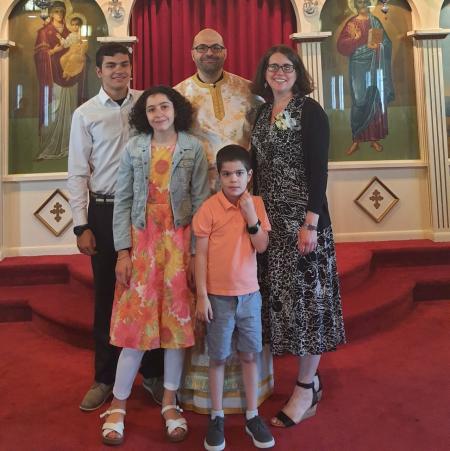
The newly ordained Fr. Nathan, his wife Khouria Rebecca, and their children John, Herman, and Raphael.
A few days later, on November 23, His Eminence Metropolitan Saba ordained Subdn. Andrew Neel (M.Div., ’27) to the Holy Diaconate at St. Stephen the Protomartyr Antiochian Orthodox Church in South Plainfield, NJ. Deacon Andrew’s newly ordained classmate, Fr. Nathan, was among the members of the Seminary community who attended the ordination, which also included Fr. Michael Nasser and Dr. Ionuț-Alexandru Tudorie.
The newly ordained Dn. Andrew Neel.
On December 5, His Eminence Metropolitan Saba ordained Dn. Nicholas Aultman (M.Div. ’26) to the Holy Priesthood at Virgin Mary Antiochian Orthodox Church in Yonkers, NY. Father Michael, Dr. Tudorie, and several other seminarians and alumni were present. During the Liturgy, His Eminence also elevated Seminary Alumnus Dn. Elias Nicolas (M.A., ’19) to the dignity of archdeacon.
Fr. Nicholas Aultman following his ordination to the priesthood.
Archdeacon Elias (Elio) Nicolas works at the archdiocesan headquarters in Englewood, NJ, where he assists Metropolitan Saba and contributes to various departments in the Archdiocese.
Metropolitan Saba ordained two more seminarians as deacons that very weekend. On December 6, Subdn. Sophrony (Scott) Strickland(M.Div. ’27) was ordained at St. Nicholas Antiochian Orthodox Cathedral in Brooklyn, NY. Seminarian John Whiteside was ordained to the Diaconate the next day, December 7, at St. George Antiochian Orthodox Church of Little Falls, NJ.
The newly ordained Dn. Sophrony Strickland.
Dn. John Whiteside’s concluded a blessed run of ordinations from late November to early December.
May God grant the newly ordained and their families many years!
Photo Credits: Dn. Sophrony Strickland (Aultman & Neel ordinations); Seminarian Christopher Whittington (Whiteside ordination); Antiochian.org/Subdn. Andrea Christoforides (Strickland ordination).
Over the summer and fall semester of 2025, two new bishops, seven new priests, and six new deacons were added to St Vladimir’s Seminary’s student body and alumni fellowship. Another was elevated in rank.
We keep them all in prayer as they continue in their ministries!
HOLY EPISCOPACY
Bishop Vasily (Permiakov) (M.Div. ’04; Asst. Prof. of Liturgical Theology, 2020–2025) Jurisdiction: Orthodox Church in America Holy Episcopacy: Ordained 16 Aug 2025 at Holy Trinity Cathedral, San Francisco, CA Current Ministry: Bishop of San Francisco and the Diocese of the West; Part-Time Faculty, St. Vladimir’s Seminary
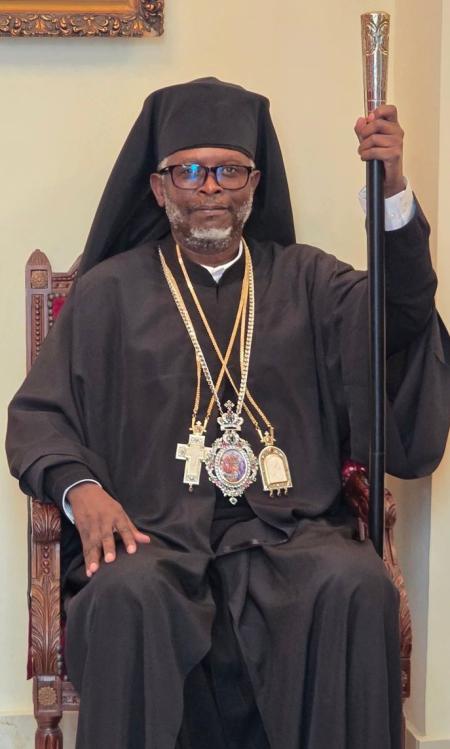
Bishop Philip Mugadizi (M.Div. ’03) Jurisdiction: Greek Orthodox Patriarchate of Alexandria Holy Episcopacy: Ordained 25 November 2025 at the Holy Patriarchal Church of Saint Nicholas in Hamzawi, Cairo, Egypt Current Ministry: Bishop of the Orthodox Diocese of Kisumu and Western Kenya; Deputy Dean and Lecturer at the Orthodox Patriarchal Ecclesiastical School of Makarios III Archbishop of Cyprus in Nairobi, Kenya
HOLY PRIESTHOOD
Priest Benedict (Benjamin) Andersen (M.Div. ’05) Jurisdiction: Greek Orthodox Archdiocese of America Holy Priesthood: Vested as a priest 13 July 2025 at St. Spyridon Orthodox Church, Loveland, CO Current Ministry: Assigned to Ss. Peter and Paul Greek Orthodox Church in Boulder, CO, and St. Spyridon Orthodox Church in Loveland, CO
(Photo: Holy Trinity Greek Orthodox Church)
Priest Michael Azar (M.A., ’05) Jurisdiction: Greek Orthodox Archdiocese of America Holy Priesthood: Ordained 20 July 2025 at Holy Trinity Greek Orthodox Church, Casper, WY Current Ministry: Professor of Theology/Religious Studies at the University of Scranton
Priest Andrew Dunks (Non-Degree Track) Jurisdiction: Orthodox Church in America Holy Priesthood: Ordained 24 August 2025 at St. Cyprian of Carthage Church, Midlothian, VA Current Ministry: Attached to St. Cyprian of Carthage Church, Midlothian, VA
Priest Geevarghese (Argey) George (Former M.Div. Student) Jurisdiction: Diocese of South-West America, Malankara Orthodox Syrian Church Holy Priesthood: Ordained 8 November 2025 at St. Mary’s Malankara Orthodox Church in Farmers Branch, TX Current Ministry: Assigned as Pastor of St. Thomas Malankara Orthodox Church, Pompano Beach, FL
Priest Gregory Gatanas (Former M.A. Student) Jurisdiction: Greek Orthodox Archdiocese of America Holy Priesthood: Ordained 9 November 2025 at the Church of the Holy Resurrection in Brookville, NY Current Ministry: Assistant Priest at Saint Sophia Cathedral, Washington, D.C.
Priest Nathan Jekel (M.Div. ‘26) Jurisdiction: Antiochian Orthodox Archdiocese of North America Holy Priesthood: Ordained 21 November 2025 at St. Philip Orthodox Church, Souderton, PA Current Ministry: Continuing studies at St. Vladimir’s Seminary
Priest Nicholas Aultman (M.Div. ’26) Jurisdiction: Antiochian Orthodox Christian Archdiocese of North America Holy Priesthood: Ordained 5 December 2025 at Virgin Mary Antiochian Orthodox Church, Yonkers, NY Current Ministry: Continuing studies at St. Vladimir’s Seminary
Deacon Timothy Heinbockel (M.A. ’20) Jurisdiction: Orthodox Church in America Holy Diaconate: Ordained 8 June 2025 at Holy Trinity Cathedral, Chicago, IL Current Ministry: Assigned to Holy Trinity Cathedral, Chicago, IL
Deacon Daniel Werner (M.Div. ’26) Jurisdiction: Orthodox Church in America Holy Diaconate: Ordained 8 September 2025 at Three Hierarchs Chapel, St. Vladimir’s Seminary, Yonkers, NY Current Ministry: Continuing studies at St. Vladimir’s Seminary
Deacon Andrew Neel (M.Div. ’27) Jurisdiction: Antiochian Orthodox Archdiocese of North America Holy Diaconate: Ordained 23 November 2025 at St. Stephen the Protomartyr Antiochian Orthodox Church, South Plainfield, NJ Current Ministry: Continuing studies at St. Vladimir’s Seminary
(Photo: Antiochian.org/Subdn. Andrea Christoforides)
Deacon Sophrony (Scott) Strickland (M.Div. ’27) Jurisdiction: Antiochian Orthodox Archdiocese of North America Holy Diaconate: Ordained 6 December 2025 at St. Nicholas Antiochian Orthodox Cathedral in Brooklyn, NY Current Ministry: Continuing studies at St. Vladimir’s Seminary
(Photo: Antiochian.org/Christopher Whittington)
Deacon John Whiteside (M.Div. ’27) Jurisdiction: Antiochian Orthodox Archdiocese of North America Holy Diaconate: Ordained 7 December 2025 at St. George Antiochian Orthodox Church of Little Falls, NJ Current Ministry: Continuing studies at St. Vladimir’s Seminary
Deacon Mathew (Royce) Mathew (M.Div. ’20) Jurisdiction: Northeast American Diocese, Malankara Orthodox Syrian Church Holy Priesthood: Ordained 13 December 2025 at the chapel of the Diocesan Chancery Muttontown, NY Current Ministry: Attached to St. Andrew Malankara Orthodox Church, Glenwood Landing, NY, and St. Luke the Evangelist Malankara Orthodox Mission Church, Bensalem, PA
ELEVATIONS
Archdeacon Elias (Elio) Nicolas (M.A. ‘19) Jurisdiction: Antiochian Orthodox Christian Archdiocese of North America Elevation: Elevated to the dignity of archdeacon 5 December 2025 at Virgin Mary Antiochian Orthodox Church, Yonkers, NY Current Ministry: Assistant to Metropolitan Saba at the archdiocesan headquarters in Englewood, NJ
If you know of an alumnus who received Holy Orders, an elevation, or monastic tonsure since June 1, 2025 and isn’t listed here, please let us know by sending details and a photo to media@svots.edu.
Father Matthew offered a short reflection for the Antiochian Archdiocese website, in which he describes his journey from not expecting ordination to being assigned to a parish much sooner than he and his wife Khouria Christina had anticipated.
I have learned much in seminary, but my greatest lesson is to expect the unexpected; God provides, and not in ways we could ever envision. Now in parish ministry, I pray that God keeps me always open to His grace-filled providence, never placing limits based on my expectations. The work is challenging, but Khouria and I have received immeasurable blessings in opening ourselves to God in this new and unexpected life serving His people.
As I said in my valedictory speech last May, "We kick, and we scream, and God provides. We say we will not, but we do… and God provides. 'For the foolishness of God is wiser than men, and the weakness of God is stronger than men.' … Brothers and sisters, you are Christ's, and you are His prophets. Go forth, then, to Nineveh, to a hostile land. And what you have vowed, perform. And God will provide.
Priest Matthew Wiley hails from Santa Barbara, CA. He earned an undergraduate degree in film at the University of California, Santa Barbara, and later worked as a technical writer for a software company. Earlier in life, Fr. Matthew practiced Orthodox Judaism. He eventually found himself drawn to Orthodox Christianity, partly due to an encounter with an elderly Orthodox Christian man at an airport. Fr. Matthew eventually decided to attend services at a nearby Orthodox parish, St. Athanasius Antiochian Orthodox Church in Goleta, CA, and discovered the elderly man he had met at the airport was a priest there! Fr. Matthew was baptized and received into Holy Orthodoxy at St. Athanasius in 2013. He married his wife, Khouria Christina, in 2024.
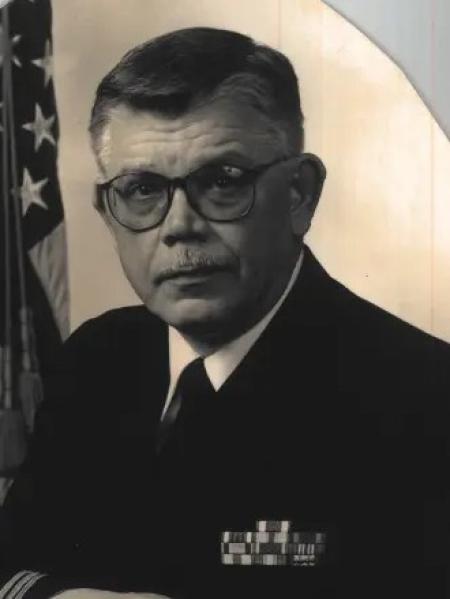
With faith in Christ and hope in the resurrection, we share news of the repose of Archpriest Paul Pyrch, an alumnus of St. Vladimir’s Seminary. Father Paul fell asleep in the Lord Tuesday, December 2, 2025, surrounded by family in Virginia Beach, VA.
The Very Rev. Paul Pyrch was born on August 4, 1938 to Paul and Rose Pyrch in Pittsburgh, PA. Growing up in a Russian-immigrant household deeply rooted in the local Orthodox Church led him to pursue a life in the priesthood. After completing his undergraduate studies in Theology and Music at Columbia University, he began his studies at St. Vladimir’s Seminary in September 1956. He married Virginia Dofner in 1961 and nine months later was ordained to the Holy Priesthood by the late Archbishop Benjamin of Pittsburgh, on June 3, 1962.
He was assigned to a small parish in Royalton, IL where, in ten years, he revitalized the parish, making it one of the more active parishes in the Midwest. Under his leadership, this small parish raised thousands of dollars for St. Vladimir’s Seminary in his drive to call others to God’s service.
After his assignment to his home parish in Ambridge, PA, Fr. Paul was commissioned into the United States Navy as an Eastern Orthodox Chaplain in 1975.
“Father Paul was an advocate for St. Vladimir’s Seminary and was one of the first chaplains to attend our Summer Institute—in fact, he was responsible for the Navy’s recognition of St. Vladimir’s Seminary as a school whose credit would be accepted by the Navy of those military chaplains who attended the Summer Institute,” recalled Professor Emeritus David Drillock, who entered the Seminary together with Fr. Paul in 1956. “Father Paul’s dedication and faithful service to Christ’s Holy Church was an inspiration to others, as he fostered nine priestly vocations for the Orthodox Church. I know at least five of these persons who attended and graduated from St. Vladimir’s Seminary.
“Through the years he served as a mentor to young priests who sought his advice and spiritual direction, especially those in divine service to Orthodox Christians in our armed services.”
Father Paul served the military community honorably for twenty-three years while receiving numerous personal awards for his ministry to thousands of sailors and marines around the world. He served three tours of duty with the United States Marine Corps—quite likely among his favorite duty stations—and was the first Orthodox chaplain ever assigned to a nuclear-powered aircraft carrier, the USS NIMITZ, one of a total of twenty-three US Naval ships on which he served throughout his career. His knowledge of Russian enabled him to provide assistance to commanding officers in translating incoming messages from Soviet ships during the Cold War.
Father Paul retired from the Navy in 1997 and was attached to the Dormition of the Theotokos Orthodox Church, in Norfolk, VA. Ever anxious to continue his life of service, Fr. Paul also took a position with H.D. Oliver Funeral Apartments as an After Care Coordinator, providing grief counseling to families in the Hampton Roads area. Father Paul came out of retirement in 2010 to serve the Dormition parish for nine months until a new priest could be assigned, and later to serve the parish of St. Elpis in Hopewell, VA, (Greek Orthodox Archdiocese) for one year while they were without a priest.
Father Paul was preceded in death by his beloved Matushka Virginia Katherine (+August 5, 2020), his high school sweetheart, to whom he was married for 59 years. They are survived by their three daughters, Catherine Raisor, Elizabeth LaMotte (Bo), and Faith Pyrch (fiancé Eric Tilton); grandchildren Leah Raisor (Jenn), Rebekah Raisor (fiancé Troy Todd), Drew LaMotte, Kyra LaMotte, George Gerber, Johnathan Pyrch (Pashence); great-grandson Elijah Pyrch; Fr. Paul’s sisters Rosemary Pyrch Simpson (Howard, deceased), Carolyn Cunningham Ziady (Gus), and Barbara Pyrch Czerwinski (Tom); and many beloved nieces and nephews.
Information regarding Fr. Paul’s funeral is available on the OCA website, here.
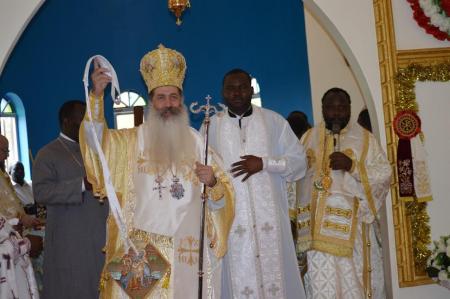
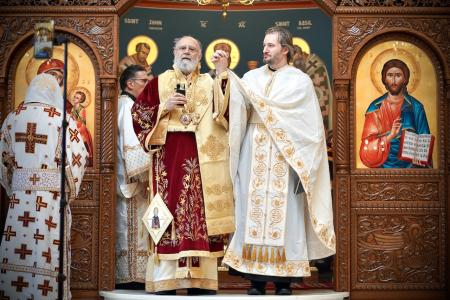
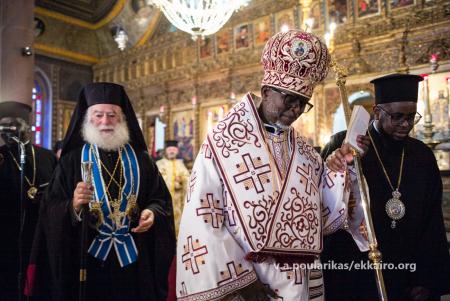
Bishop-Elect Philip (Mugadizi), an alumnus of St. Vladimir’s Seminary, was ordained Tuesday, November 25, to serve as Bishop of the Orthodox Diocese of Kisumu and Western Kenya.
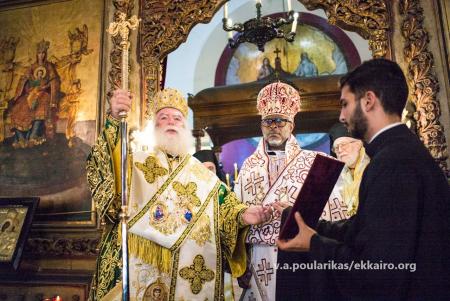
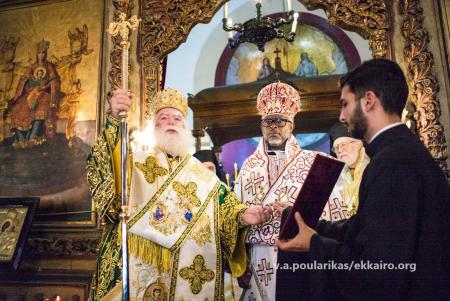
The ordination took place at the Holy Patriarchal Church of Saint Nicholas in Hamzawi, Cairo, Egypt. The Divine Liturgy and ordination rites were presided over by His Beatitude Theodoros II, the Pope and Patriarch of Alexandria and All Africa.
Following the ordination, the Patriarch recalled that the words of our Lord, “The harvest is plentiful, but the laborers are few,” remain alive and relevant, particularly in the missionary land of Western Kenya. His Beatitude called on the new hierarch to become a “laborer of this harvest,” fearless in the face of the difficulties of ministry, with the conviction that Christ will strengthen him, the Holy Spirit will enlighten him, and the Saints will accompany him.
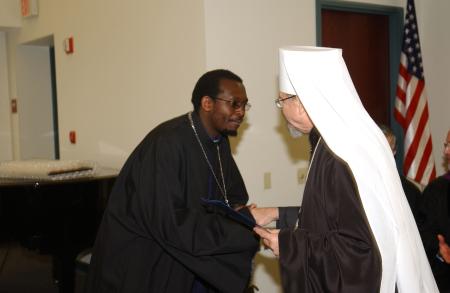
Archimandrite Philip with Metropolitan Herman (Swaiko) at St. Vladimir’s Seminary in 2003
Bishop Philip expressed his deepest gratitude to Patriarch Theodoros II and assured His Beatitude that he would make every effort to prove himself worthy of the trust and great mission entrusted to him.
His Grace Bishop Philip holds a Bachelor’s Degree in Leadership and Management from St. Paul’s University in Kenya, and he graduated from St. Vladimir’s Seminary with a Master of Divinity (M.Div.) degree in 2003. He currently serves as Deputy Dean and Lecturer at the Orthodox Patriarchal Ecclesiastical School of Makarios III Archbishop of Cyprus in Nairobi, Kenya.
Archimandrite Philip with Metropolitan Herman (Swaiko) at St. Vladimir’s Seminary in 2003
Bishop Philip is described as “a devoted servant of God who has consistently demonstrated humility in his walk of faith, integrity in his leadership, and commitment to teaching the principles of the Orthodox faith. … His journey in education and ministry reveals a rare blend of intellectual excellence and spiritual depth, a proof that true leadership flourishes when knowledge and humility walk hand in hand.”
May God grant His Grace Bishop Philip many years! AXIOS, AXIOS, AXIOS!
Some information for this article was adapted from romfea.gr.
The Very Rev. Michael Nasser joined St. Vladimir’s Seminary in the summer of 2025 to serve as the Seminary’s Spiritual Formation Director. It was a return to the place he began his seminary studies and formation in the early 1990s. Fr. Michael studied at St. Vladimir’s Seminary for two years before completing his M.Div. at Holy Cross Greek Orthodox School of Theology, in Brookline, MA. He also received his Th.M. at Holy Cross following studies at Gordon-Conwell Theological Seminary in Beverly, MA, in the fields of Missions and Youth Ministry. Fr. Michael’s priestly ministry in the Antiochian Archdiocese has spanned more than twenty years, taking him to parishes in Massachusetts, Pennsylvania, Kentucky, and Michigan; to Antiochian Village where he served as Camp Director; and to Tijuana, Mexico where he served as a mission priest.
Fr. Michael has been married to Khouria Vicky since 1994, and they are blessed with three wonderful (and now adult) children: Maria, Joshua, and Elena.
Fr. Michael sat down with first-year seminarian Seraphim Hamilton to talk about his experience at St. Vladimir’s Seminary and to offer insights about forming the next generation of priests—as well as how best to go about discerning whether you are being called to ministry in the Church.
Watch the discussion in its entirety, or read an abbreviated transcript below.
Tell us about your history with St. Vladimir’s. How long have you been interacting with this institution?
Well, it began in the dark ages of the early 1990s. The Seminary played an important part of my journey to ministry. It’s actually the place that I was petrified of when I was just starting to think about life in ministry, and in the priesthood in particular. So I had to sort of get over that hurdle of coming here to this place. And once I came to visit, I came during college, I was all in. I was going to quit going to the college I was at and come to the collegiate program here (at the time you could actually finish college here). But no, I held off, and I didn’t actually graduate from here. I did two years here, and then a year at Holy Cross, and I finished up my M.Div. up there. But I loved my years here and great, great experiences.
Any big impressions on shifts between then and now?
It’s a much different place in lots of ways. I’m still finding parts of the campus that didn’t exist when I was here, it was all just forest area that you couldn’t even get to. Much bigger, much more complex. We had some—we would call them—luminaries that were here. My professors were Fr. Hopko, Fr. Meyendorff, Professor Kesich—names that are revered names now, so to not have them here was a little strange. I’ve adjusted now, of course, but so impressed with the faculty we have, so impressed with the leadership of Dr Tudorie and the staff. In many ways, the atmosphere on campus is better. It’s lighter. There’s a bit more joy in the air. So it’s almost the best of what it was, and now it’s even better. So I’m really enjoying my time here so far.
Fr. Michael meeting with seminarians in February 2024 during an organized visit to campus as spiritual formation resident.
Thank God! Between being a seminarian here and now Spiritual Formation Director, sketch out how you ended up back here.
I’ve had a very varied ministry—parishes, I was a camp director, I was a mission priest in Mexico for three years, all of which I feel so blessed for, all the opportunities that I’ve had. But the opportunity to come back here was really not in my mind in any formal way, although I thought even early on in my ministry, at some point, I would love to share what I was learning along the way with the next generation of leaders in the Church. I hadn’t really thought about how that would work, except maybe in retirement, volunteering. I told the previous dean of the school that someday—having been a parish priest at the time, for about thirty years—I said, I want to come back and teach a class, and the name of the class is “What It’s Really Like to Be a Priest” [laughs]. And we laughed about it at the time. And then there was a change in administration, and when they were looking for a new director of spiritual formation my name came up through some common colleagues that I share with some of the staff here, and they approached me. At first, I just thought it was a joke! I literally laughed at the first phone call. Then that was followed by a lot of intimidation about what it would mean to come back and help to work for the formation of the seminarians and their future ministry. But the more I thought about it, the more excited I got about the possibilities of sharing what God has taught me through the many different ways that I’ve served in many different locations and situations. And now that I’m here, I’m even more convinced that I think this is where God wants us to be. And I’ve just been loving my time talking with the seminarians.
Fr. Michael moved onto campus with Khouria Vicky and daughter Elena.
It is a heavy task, to direct spiritual formation of the people who are going to be spiritually forming others. … How do you approach that? What is your vision for what you want to accomplish here?
I look back at my own life and realize how many ways God was forming me through other people. Some of them knew they were doing that and did it intentionally. Some didn’t, but were still very beneficial to me. And just how many situations I was in and, I would say, especially the difficult ones. You know, when you go through a difficult time, the difficulty can be just all you see. Sometimes it just fills your vision. And at the time, it was hard to see those as good experiences. But now looking back, I look back at all my experiences, and especially the really tough ones, and I can recognize how valuable those were in my formation, my development, in my growth, both as just a Christian, as a human being, and as a priest.
So as I’m meeting with the students right now … we’re just getting to know each other. But one of the things I’m sharing with them is that I want to provide an environment and a relationship where the students can process their time here, and specifically their challenges with trying to find ways to grow from them. You know, life in seminary isn’t easy for married students. They’re uprooting their families. They’re bringing them here. Some have kids … and moves are always difficult for families. This is difficult in the sense that they’re not moving into their own house somewhere. A lot of them have moved out of houses, now they’re living in little apartments, and in all kinds of ways it’s difficult. The life of a seminarian is very full in terms of time commitment. So you know, the seminarians are torn between their schoolwork, their parish assignments, their other responsibilities being a student and in family life. And then you have single students who have their own struggles as they’re going through this phase of life, just a different struggle. But everybody has hard times here. In the past and even in my own experience here, those hard times were just seen by so many of us as things to get through, and at best survive. But as I look back at my life in ministry, so many of those challenging times were the opportunities that I needed to grow. I didn’t want those things to happen at the time. The last thing I wanted is to go through those difficult times. But as I went through them, and then reflected later on them, now I can look back at that as crucial to my growth. So one of things I’m hoping to do is help the students. And I told them, I said, “Come in. Tell me your tale of woe. I will be compassionate.” I’m not going to just tell you, you know, “Suck it up,” because they are difficult [experiences] and we should acknowledge that. At the same time if we just “get through it,” we’re missing big opportunities. So one thing I hope to do is help them process that and realize that God, even in those really difficult times, is using those difficulties to form them in really important ways that they’re going to benefit from later on, when they’re out doing ministry.
Speaking with incoming students at orientation, August 2025.
Could you speak a little more to the way in which you yourself were spiritually formed at seminary? What specific things kind of cut into you in a way that leaves that cross-shaped mark that we’re looking for?
Well, when I was here there was no spiritual formation program, and as I explained to the students in orientation this year, the whole program here, then and now, is spiritual formation. You know, I’m not in charge of the seminary, even though the seminary’s job is the spiritual formation of the students. I am a part of that, and it’s not the part that relates to the running of the chapel and the liturgical life, as much as I serve there, and that’s a part of what I do here. Father Alexander [Rentel], he’s the Rector of the chapel. That’s really his job in addition to the other things that he does. I don’t do the work of a professor, at least not at this point, and will always, if I teach, it’ll be the minor part of my time here. As I see it, and as I’ve talked with the Dean Dr. Tudorie and others, I really want to work on bringing all the rest of that experience: the community life, the challenges of operating in a tough schedule, the difficulties as students start to encounter real people in their ministry, whether it’s through a parish assignment or through their CPE program. Maybe they’re working in an emergency room, in a big city hospital, or they’re at a nursing home, dealing with real people and then learning how to process that. It’s all those other things that are not really part of any set program that I want to help the students process. And specifically—I love the way you say that, to “find that cross-shaped mark”—those are ways that we are called to serve and live out a crucified Christian life, which is not an option. Christ said, “If you want to follow Me, you deny yourself, you take up your cross.” He didn’t say, “One of the ways to follow.” That [taking up your cross] isthe way. And if we’re not learning to do that—and I would say especially in the seminary, if students are coming here and they’re being shown crosses, or there are crosses they come across, and all they want to do is get around them, or just survive them, get through them, get past them—then they’re not going to be formed in those situations, in those encounters with those challenges, with those crosses, and they’ll miss that opportunity. I tell students … “I don’t want to give you bad news, but life isn’t easier once you’re done.” It really isn’t. It’ll be easier in the sense that if you learn how to handle the difficulties and use them for your spiritual growth, or more properly, let God use them. Don’t close Him out of that struggle. Then those things become the ways that we all grow personally. And I think what’s unique to a seminary is we’re not growing just for ourselves. I think we should all be growing as Christians, but the people at the seminary, the students, are here specifically, as they can go out and minister to others who all need to be taught how to encounter the crosses in their life. So how does a priest or somebody serving any function in the Church as a leader of ministry, how do they teach somebody else how to bear their cross and grow spiritually if they themselves haven’t done it? And so that’s what I see is really my job, trying to help everyone process those challenges well and practice the ways that they’re going to have to continue bearing the crosses. Because once we get out of here, there are just different crosses in a life of ministry.
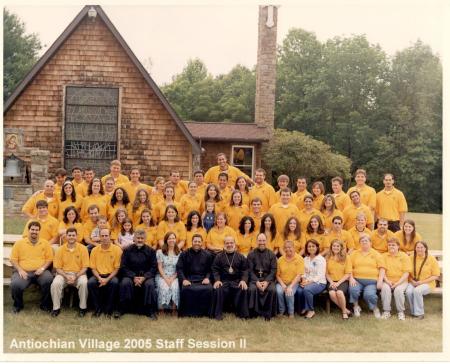
Fr. Michael with staff at Antiochian Village in 2005. (Photo: avcamp.org)
For someone to whom the thought has occurred, “Hey, maybe I should consider becoming a priest,” what is a good sign they should consider that?
It’s such a hard thing, because the call to ministry really is a mystery, no less mysterious than the other sacraments. We look at the Eucharist as a mystery, and we know that we don’t define how bread and wine become the very body and blood of Christ. In the same way, with the same respect, I think we should approach the mystery of men being called the priesthood. So it’s not that we don’t say anything, but we have to recognize that this is not something that can be fully explained or understood. It’s just something we know to be true. When I have heard of a young man who has either his own sense of a call or my perception of a potential call, one of the things that I’ve suggested they do is develop a relationship with the altar of their church, which I know sounds like a crazy thing. How do you develop a relationship with what some people consider a piece of furniture? Yeah, that piece of furniture, to some, is the meeting place of heaven and earth. It’s where the gifts are offered from the people through the clergy set up to be offered up to God in the Eucharist. It’s the source of so much of our life in the Church—the sacraments, the liturgical life. And then we ask a, typically, young man to go and stand at that altar. As Bishop John of the Antiochian Archdiocese says so beautifully, a priest stands before God on behalf of the people, and he stands before the people on behalf of God. So when a young man starts to sense that calling, that’s one thing I do is say, come and just be an altar server. See what developments happen, and see what understanding starts to grow because, principally, that’s what a priest does. This is the—you might call it—the paradox of the priesthood. The most central thing the priest does is serving at that altar. That defines him in so many ways … and yet, if we just go by time spent, it’s probably the place he spends the least amount of time. Even priests that serve daily services, the majority of their day is not served at the altar, but it does define everything else they do. So I think that’s one way to help them develop the potential for relationship with that very sacred place. And because it’s a mystery, I think all we can do is just try to remove barriers that can be removed. For me, it was the fear of, if that first domino fell, if I came to the seminary and if I wasn’t blocked through that, then maybe everything else is going to come, and maybe I’m not ready for all that. So walking slowly with somebody who’s trying to discern their call. Being reminded that every step that you’re not going to walk alone. You walk with Christ, you walk with your priest, and others that are going to walk with you. You’re not going to walk this path alone. Another barrier I think we really need to work harder at is, you know, fears of financial instability. There are some people who are called to poverty, especially monastics, and for them poverty is not a barrier. But for a married man, or a man who wants to be married, it’s not wrong to want to financially support your family. And so I think there’s lots that we could do to remove the barriers for—and I think we’ve come a long way—supporting clergy financially. I think we still have work to do, but then I think we have to communicate that. When I talk to young men and I say, you know, “Have you thought about priesthood?” “Well, I would, but I want to take care of my family, and I don’t want to put them through living a life of poverty.” Well, a lot of them don’t know that’s not necessarily the case. So removing those barriers that I think we can, and there are others.
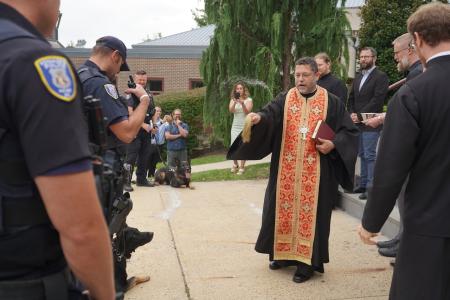
Fr. Michael blessing Yonkers Police Department’s K-9 Unit during YPD’s visit to campus in September 2025.
How does a person distinguish if they’re concerned about, “Oh, maybe I’m just being spiritually delusional. How could I be a priest? How could I stand at that altar? I’m just going to put this away, because this is from the devil.” How do you manage all of those thoughts?
Don’t do it yourself. You process it with a father confessor that hopefully you have a good relationship with and that you can dialog with. I tell the students here, your job was to discern as best you can that God intended for you to come and get the experience of being at the seminary, and your job is to decide how much you’re open to. Are you willing to be ordained, first as a deacon and then later as a priest? Other than that I really think that those that our candidates really shouldn’t play much more of a role. Their job is to be available, to be perceptive, to dialogue with a good mentor, like a spiritual father, to take that spiritual father’s advice over their own. They might say, “Well, I could never stand there. And if their father confessor says, “I think you should at least pursue this next step”—if they don’t feel that it’s wrong, that it’s the wrong direction—I don’t think they should let either their pride or their humility stop them. I think, in their humility, they say, “Father thinks I should do this. I’m willing to do it. I take the next step and I present myself to the bishop and let the bishop decide.” … I just think it’s easy to get over involved. And we might say, in a worldly sense, you have every right to. It’s your life. Well, as a clergyman, it’s not! There are traditions where you get a new name. You are told where you’re going to live. You’re not typically asked. And you know, the bishops try to accommodate. They want a good situation for the priest, for his family, but ultimately you are submitting your life to service in the Church, and specifically through the bishop. And so practicing that, practicing that willingness to be obedient and to just present yourself and say, “Here I am, Lord. If it’s Your will, send me.” And let God and the bishop take care of the rest.
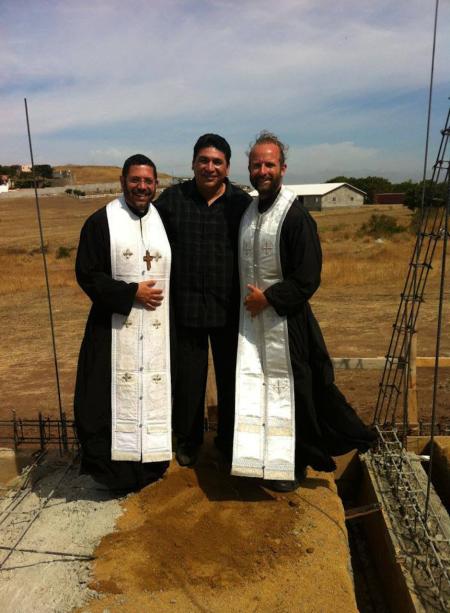
With orphanage director Luis Sanchez and Fr. Nicholas Andruchow (SVOTS Class of 2002) at the blessing of foundations for a construction project for Project Mexico and St. Innocent Orphanage in June 2013. (Photo: Project Mexico & St. Innocent Orphanage)
Father Michael, is there anything else you really want to communicate to people as they maybe consider coming to seminary or as they are praying for the seminary?
Yeah, we need prayers. This is a tough place to be. Just think about it as sort of a tactical area. You know, if we were in a physical war, the opposing army would try to knock out headquarters and ammo depots and training centers. This is the training center for those that are going to lead the spiritual combat for the Church in the years to come. So to be praying for the seminaries, even financially support the seminaries. … For people that are considering or even just get an inkling of service, learn about it. These days you can go on the website, you can take virtual tours, you can come and visit. We have an open house … or just like I did in my young adult years, come and make an excuse for a visit. I had a friend being ordained across the river, and I came here for a couple nights. And you know, there’s nothing like coming to see what it’s like. I still remember, even how old I am, that for the entire two nights I was here there was never a time I woke up for a second that I didn’t hear typewriters somewhere in the building! You don’t hear that anymore, thankfully, as people just click on their little keyboards. … Be open that maybe God is calling you, and if so, work on your trust that you’ll be okay. Work on your trust in Him, that He’ll get you through. I think for me, that was the big lesson of my journey to coming here as a student, was all these kinds of fears. I mean, it’s so many fears layered on fears, and what I got to by the end of the process was “Okay, it’s okay to be afraid.” But am I really thinking that if God wants me to do this, that He’s not going to provide for me a way through all those things I’m afraid of? And then it was just enough for me to say, “Let me give Him a chance to do that,” and I came. And thank God, I’ve been blessed ever since.
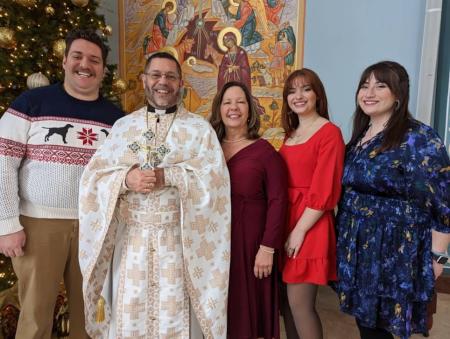
The Nasser family: Joshua, Fr. Michael, Khouria Vicky, Maria, and Elena.
St. Vladimir’s Seminary faculty member Dr. Ana Iltis is being honored with the 2026 Paul Ramsey Award for Excellence in Bioethics.
The Paul Ramsey Award, named after the distinguished twentieth-century writer on bioethics, honors those who have made an outstanding contribution to the bioethics discussion and are actively engaged in society. Each year, the Center for Bioethics and Culture and the Paul Ramsey Award Committee select the recipient.
Ana S. Iltis, Ph.D., is St. Vladimir’s Seminary’s Professor of Philosophy for the Doctor of Ministry (D.Min.) program as well as the Carlson Professor of University Studies, Professor of Philosophy, and Director of the Center for Bioethics, Health, and Society at Wake Forest University. She has been working on both secular and Christian approaches to bioethics throughout her career, and she is an active teacher and scholar with a passion for integrating theory and practice in bioethics. Her scholarly focus is primarily on the ethical conduct of human research, including research involving children and mental health, first-in-human studies, and risk in research decision-making. She has published extensively on ethics and policy issues regarding organ transplantation and emerging biotechnologies as well as the role of religion in bioethics. Dr. Iltis is Founding Co-Editor of Narrative Inquiry in Bioethics (Johns Hopkins University Press), Associate Editor of the Journal of Medicine and Philosophy (Oxford University Press), Associate Editor of Christian Bioethics (Oxford University Press), and co-editor of the Annals of Bioethics (Routledge) series. She recently edited the Oxford Handbook of Research Ethics.
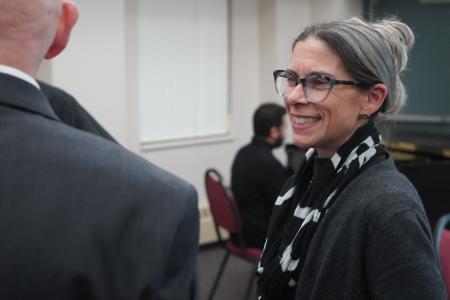
Dr. Iltis teaching Doctor of Ministry students during on-campus intensives in July.
Professor Iltis earned her Ph.D. in Philosophy at Rice University, studying under renowned bioethicist and SVS Press author Dr. H. Tristram Engelhardt, Jr., and completed bioethics training at Baylor College of Medicine in Houston, Texas. She is a past president of the American Society for Bioethics and Humanities.
Dr. Iltis, husband Steve, and daughter Sophia are members of Holy Cross Orthodox Church (OCA) in Kernersville, North Carolina. She also serves on St. Vladimir’s Seminary’s Board of Trustees.
Dr. Iltis is set to receive the Paul Ramsey Award in April at the 2026 Paul Ramsey Dinner in East Bay, California.